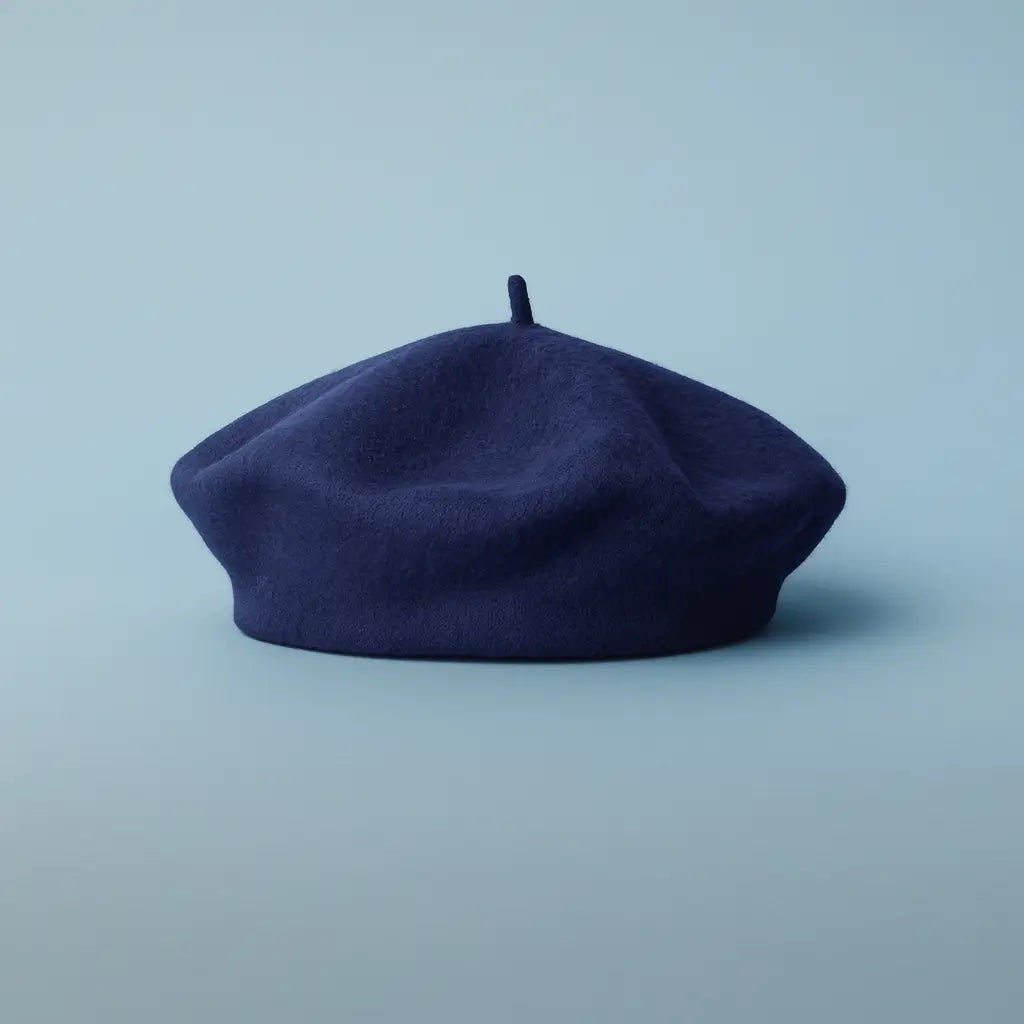
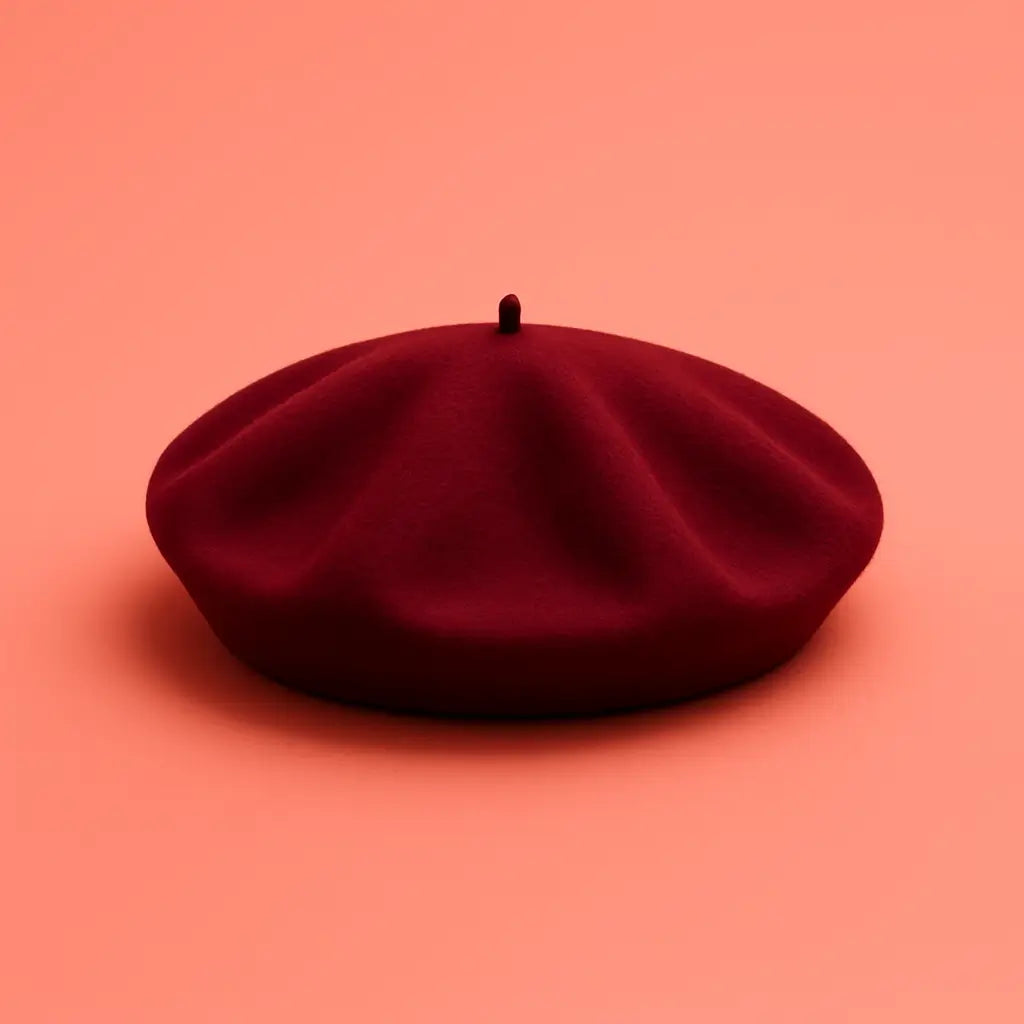
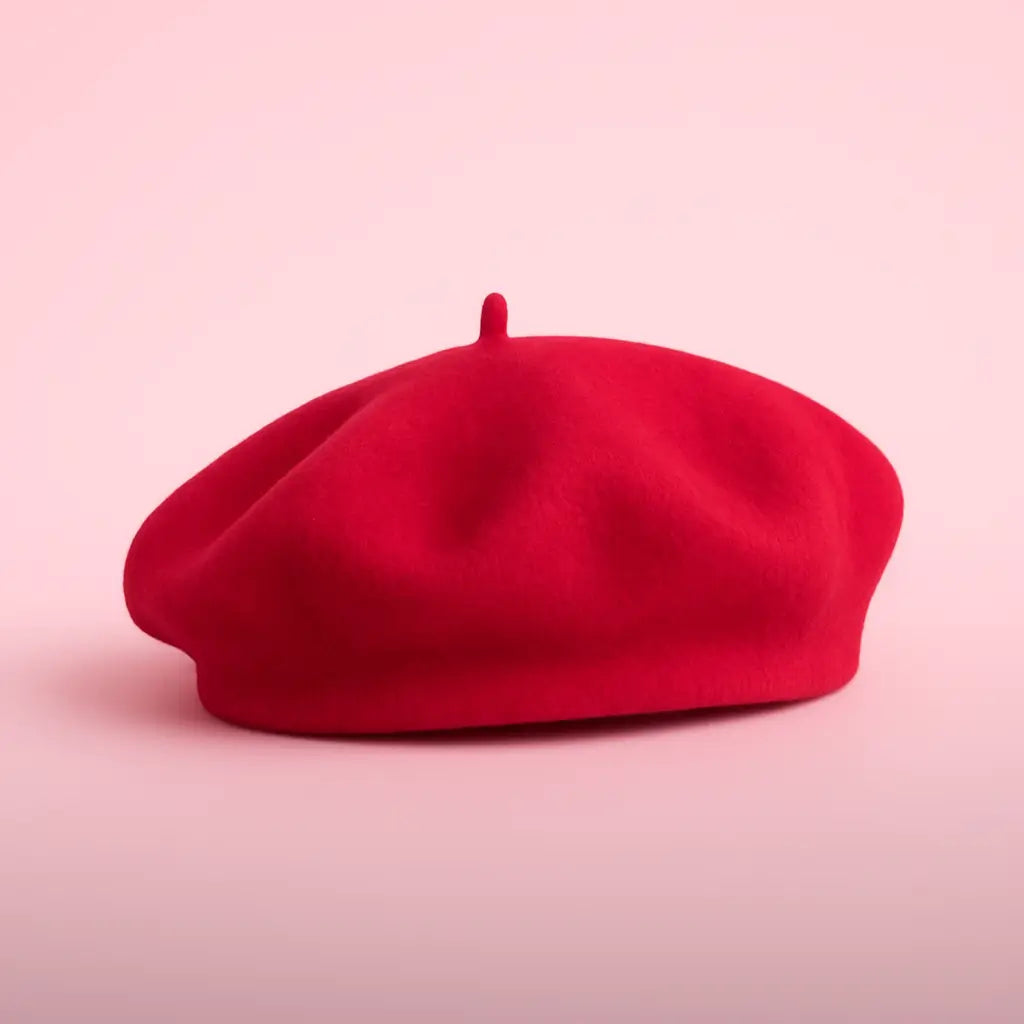
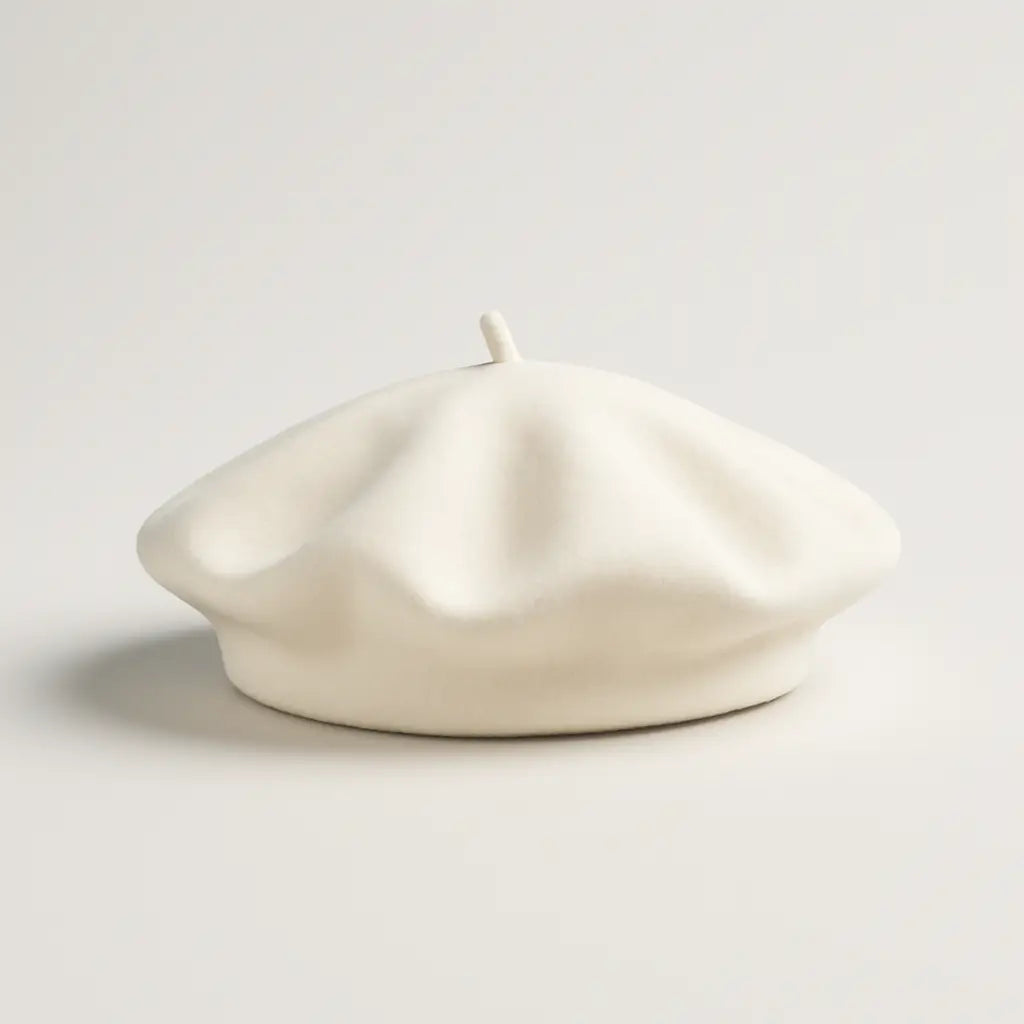
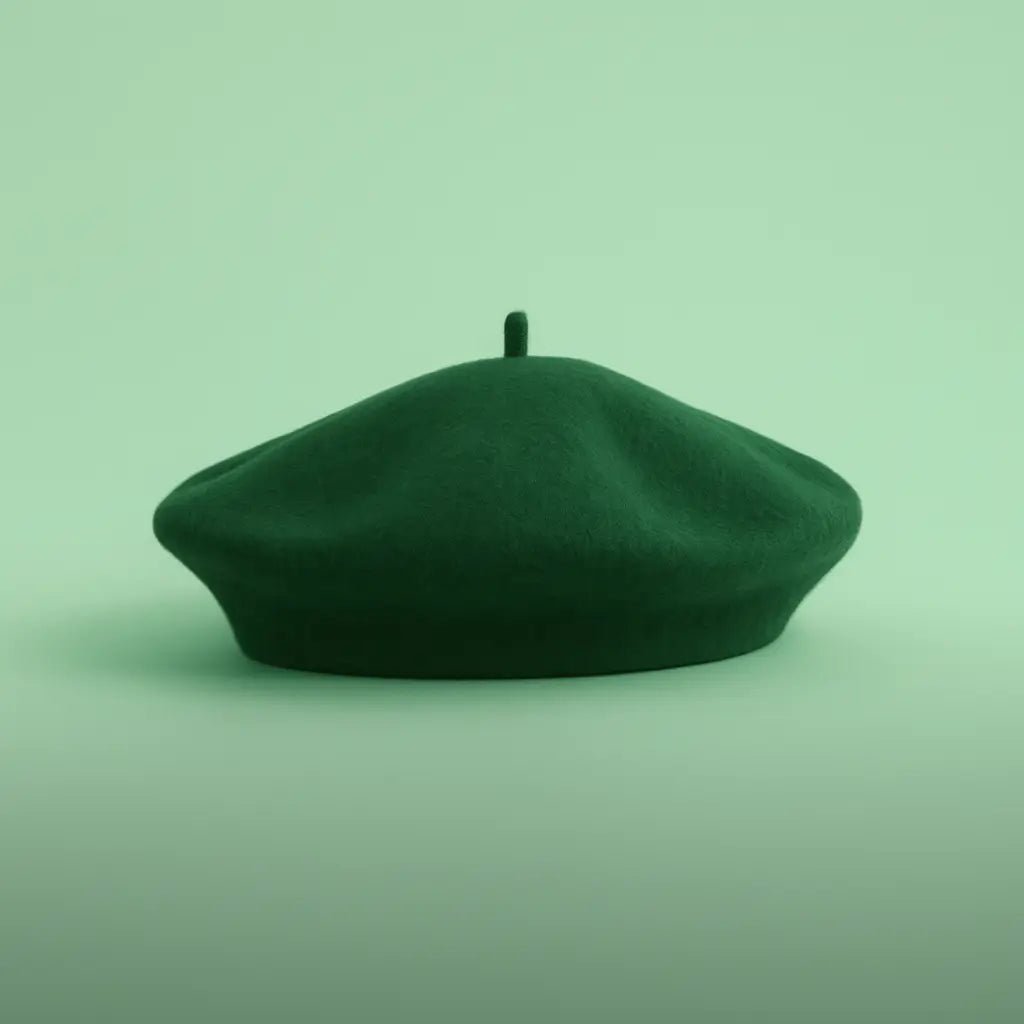
Short answer: a wool beret is fine in light rain and drizzle, and wrong for a downpour. Wool carries a natural waxy coating called lanolin, so the first few minutes of rain sit on the surface as beads rather than soaking straight through. Past that, it takes on water and gets heavy.
I am Camille, and I shape and finish berets by hand in the Béarn, where it rains a great deal. Shepherds in my region wore wool berets in wet weather for centuries for exactly this reason. Here is how far a beret in the rain really goes, and how to dry one properly afterwards.
- Dense wool berets shrug off drizzle and short showers thanks to natural lanolin.
- No beret is waterproof, so heavy or steady rain calls for a hood.
- Wool stays warm even when damp, which cotton and acrylic do not.
- Leather sheds water best of all, though it needs conditioning afterwards.
- Dry a wet beret flat, at room temperature, and never on a radiator.
The short answer
How a beret handles rain comes down to what it is made from. The table below is the honest version, based on how these materials behave once they are actually wet rather than how they look in a shop.
| Material | Light rain | Heavy rain | Notes |
|---|---|---|---|
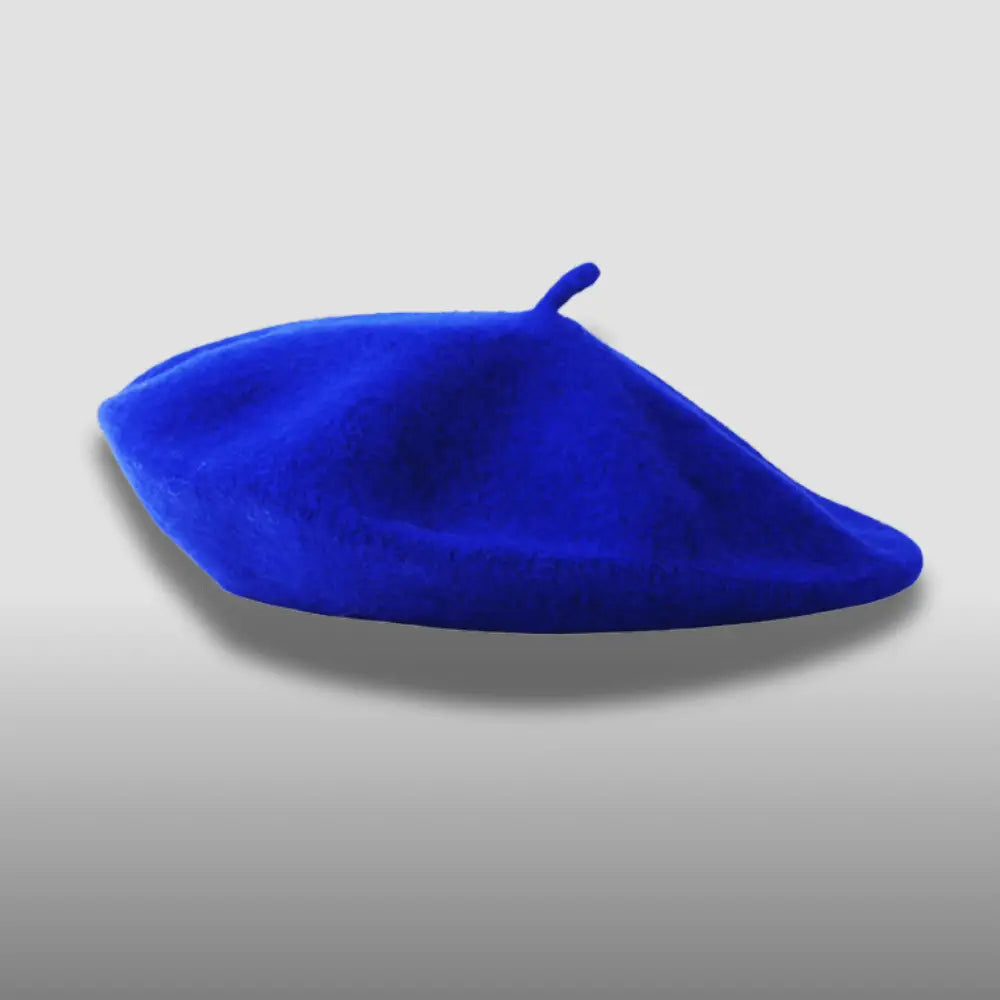
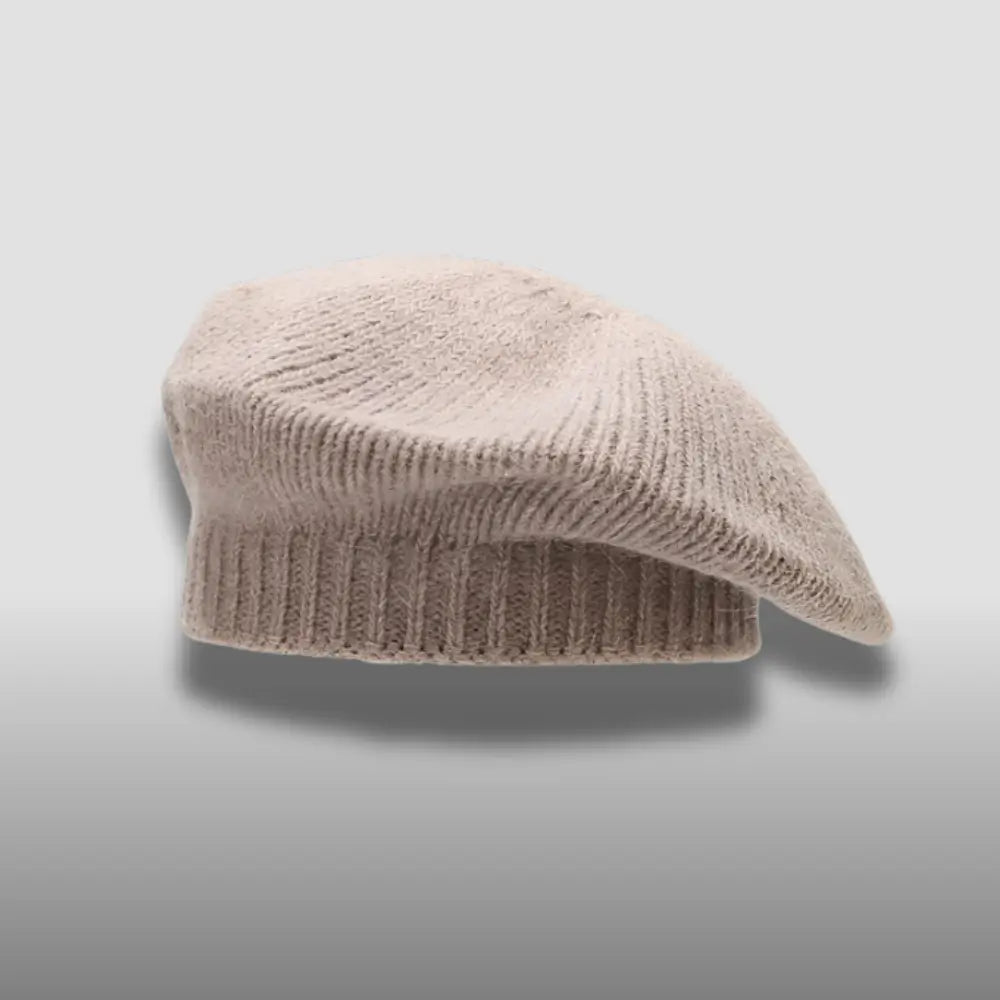
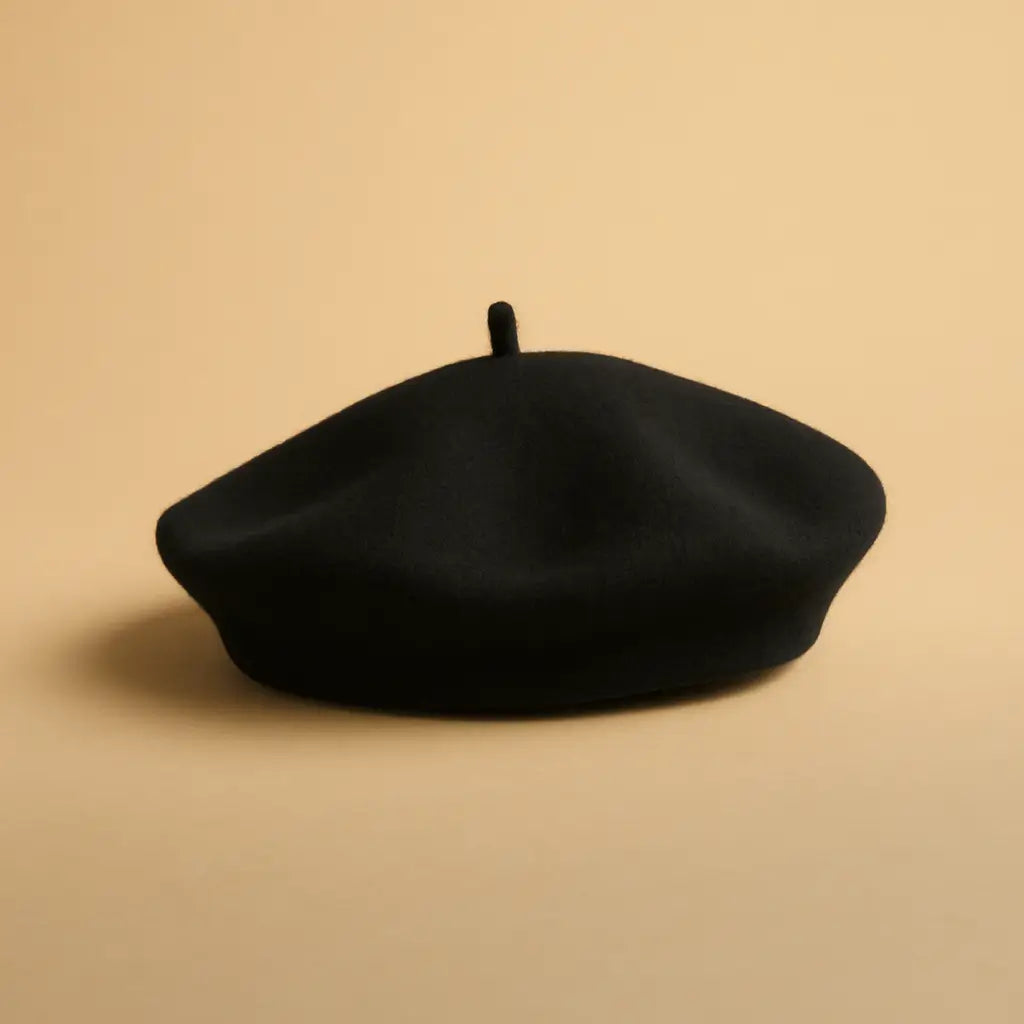
| Dense wool felt | Good | Poor | Beads water at first, stays warm when damp |
| Knitted wool | Fair | Poor | Open stitches let water through faster |
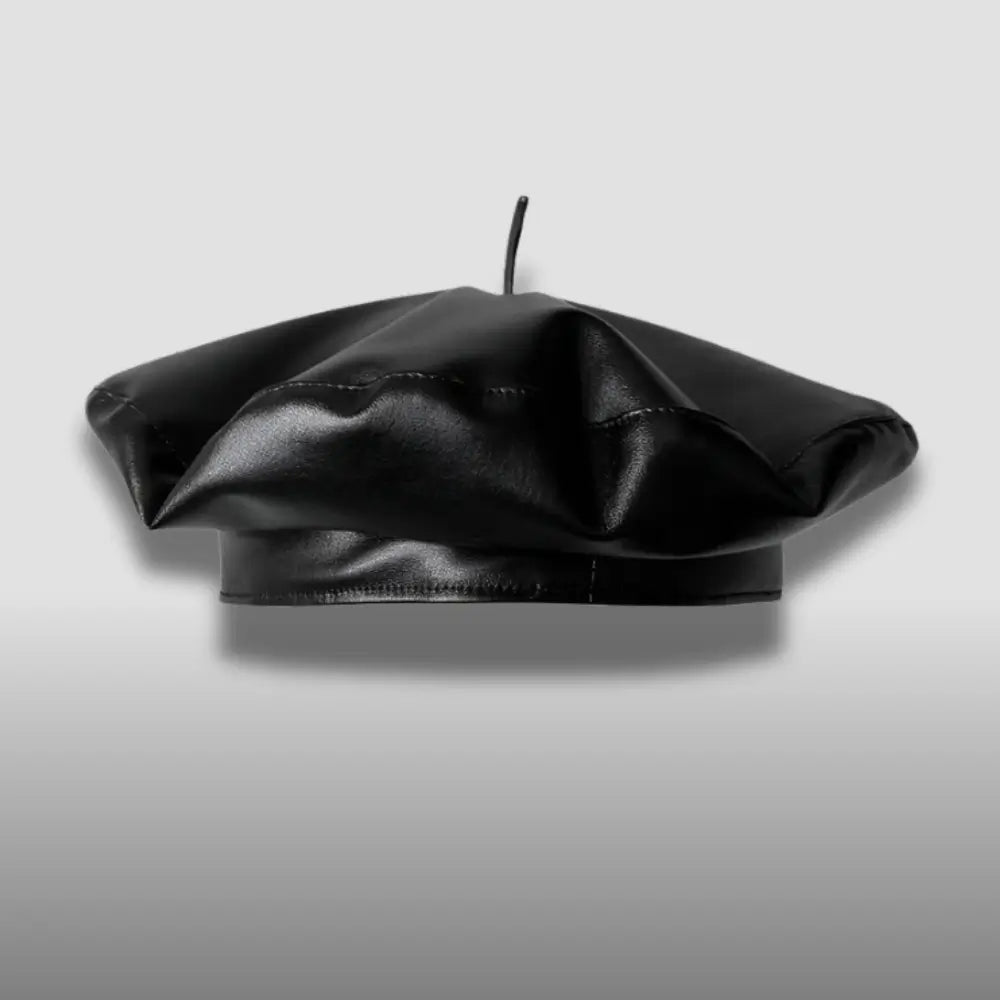
| Leather | Very good | Fair | Sheds water, needs drying flat and conditioning |
| Cotton | Poor | Poor | Absorbs quickly and feels cold once wet |
| Acrylic blends | Fair | Poor | Dries fast but offers little warmth when damp |
Why wool copes with rain
Wool fibres are coated in lanolin, the grease a sheep produces to keep its own fleece dry on a hillside. Some of that survives the felting process, which is why fresh rain sits on top of a good wool beret in small beads for the first minute or two instead of sinking in. Give the crown a flick and most of it comes straight off.
The second advantage matters more. Wool holds a great deal of moisture inside the fibre before it feels wet against your skin, and it keeps insulating the whole time. A damp wool beret still keeps your head warm on a cold walk home, which is the point that separates it from every synthetic alternative.
Who a chocolate brown beret suits best
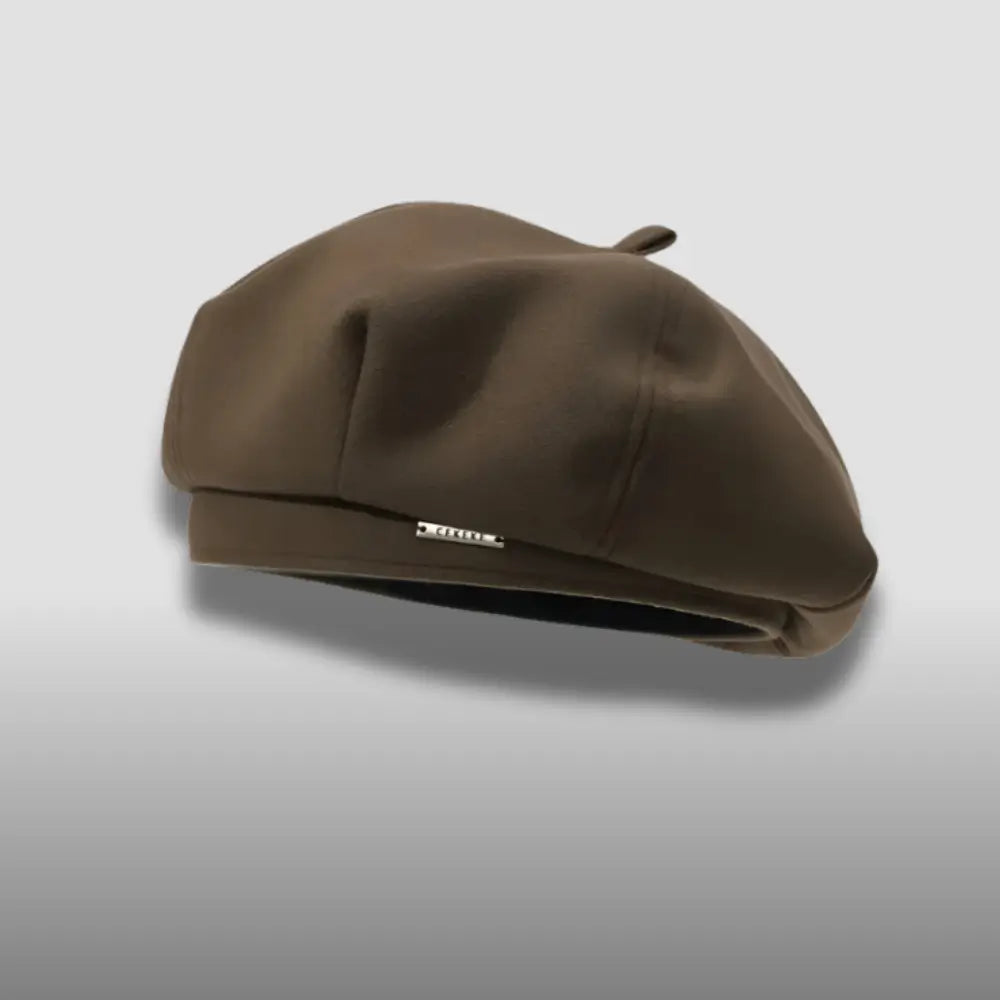
Anyone walking in autumn weather, wearers who would rather not see every water mark, and people who want a wet weather hat that still looks considered.

★★★★★ 4.8 · 61 reviews
Chocolate Brown Beret
Deep brown wool with a smooth, dense surface. Darker shades hide the odd rain spot far better than pale ones do.
Shop now · $45Shake the beret out the moment you step indoors, before the water has time to travel into the felt. One firm flick and a quick reshape of the crown with your palm removes most of what is sitting on the surface, and the beret dries in a fraction of the time.
Where the limit sits
A beret is a hat, not a raincoat, and pretending otherwise ruins good wool. Drizzle, a passing shower, wet snow and the walk from the car to the door are all comfortably within range. Twenty minutes of steady rain is not. Once the felt is saturated it gets heavy, the crown sags, and the band starts to feel cold against your forehead.
The other limit is wind driven rain, which pushes water sideways under the edge instead of onto the crown. A beret has no brim to protect your face, so in a real storm you want a hood over the top of it or nothing on your head at all. Our guide to wearing a beret in different seasons covers how it behaves across the rest of the year.
Who a khaki beret suits best
Walkers and commuters, anyone who wants a colour that lives happily with a raincoat, and wearers who would rather their hat looked lived in than pristine.

★★★★★ 4.8 · 69 reviews
Khaki Beret
Soft tan felt with a firm dome that holds its shape in damp air. An easy match for a trench coat or a waxed jacket.
Shop now · $45How to wear one on a wet day
The way you set a beret changes how much rain it takes. Worn flat and pulled slightly forward, the crown becomes a small roof that pushes water out past your temples. Tilted back at a jaunty angle, the same beret funnels rain straight onto your forehead and collects it in the fold.

Pair it with a coat that has a collar you can turn up, since most of the discomfort in wet weather comes from water running down your neck rather than from your head being damp. A trench coat and a wool beret is a combination that has worked in Paris for eighty years, and it works because the two pieces cover different problems.
Who a French green beret suits best
Anyone who wants colour that stays quiet under grey skies, wearers pairing a beret with olive or navy outerwear, and people who like a shade with depth to it.

★★★★★ 4.8 · 89 reviews
French Green Beret
Deep forest green in dense wool, our most reviewed colour. It looks its best against the flat light of a rainy afternoon.
Shop now · $45Should you waterproof a beret?
A silicone or fluorine free spray made for wool or felt hats does help, and it buys you perhaps another ten minutes of protection in light rain. Test it on the underside first, apply it thinly in two light passes rather than one heavy one, and let it cure fully before wearing.
- Use a spray made for wool or felt, never a general fabric or shoe treatment.
- Test underneath first, since some sprays darken pale wool permanently.
- Two light coats beat one heavy one, which can stiffen the felt.
- Reapply once a season, not every week.
- Skip it entirely on leather, which wants a proper leather conditioner instead.
Drying a wet beret properly
Most berets that end up misshapen were not ruined by the rain. They were ruined in the hour afterwards. Wet wool is soft and pliable, so it sets into whatever shape you leave it in, and heat locks that shape permanently.
- Shake it out, then reshape the crown and band with your hands while it is still damp.
- Lay it flat on a dry towel, or over an upturned bowl of roughly head size.
- Leave it at room temperature, away from radiators, fires and direct sun.
- Turn it once halfway through so both sides dry evenly.
- Brush the surface gently once dry to lift the fibres back up.
Nothing here is complicated, and it takes a minute. For the full routine, including stains and general upkeep, our guide on how to clean a beret goes through it step by step.
Never dry a soaked wool beret on a radiator, over a heater or with a hairdryer, and never put it in a tumble dryer. Heat plus moisture is exactly how wool is felted in the first place, so it shrinks the crown, hardens the band and takes a size or more off the fit. That damage cannot be reversed.
Frequently asked questions
In light rain and drizzle, yes. A dense wool beret beads water for the first minutes and keeps you warm even once damp. In heavy or prolonged rain, wear a hood instead.
No. Wool is water resistant thanks to natural lanolin, not waterproof. It repels the first of the rain, then absorbs steadily once that surface layer is overwhelmed.
Rain alone rarely does. The damage comes from drying it badly afterwards, so reshape it while damp and let it dry flat at room temperature.
Leather sheds water best, with dense wool felt close behind and far warmer. Cotton and open knits are the weakest choices in rain.
Yes, and it is the sensible answer in a downpour. A beret has no brim, so it sits comfortably under a hood and keeps your head warm while the hood keeps it dry.
So, is a beret okay for rain? For a drizzle, a shower and a damp walk home, it is one of the best hats you can own. For a real downpour, put a hood over it, then shake it out and dry it flat when you get in. Treated that way, a good wool beret sees out many wet winters.


Worn well, never overthought.
Camille