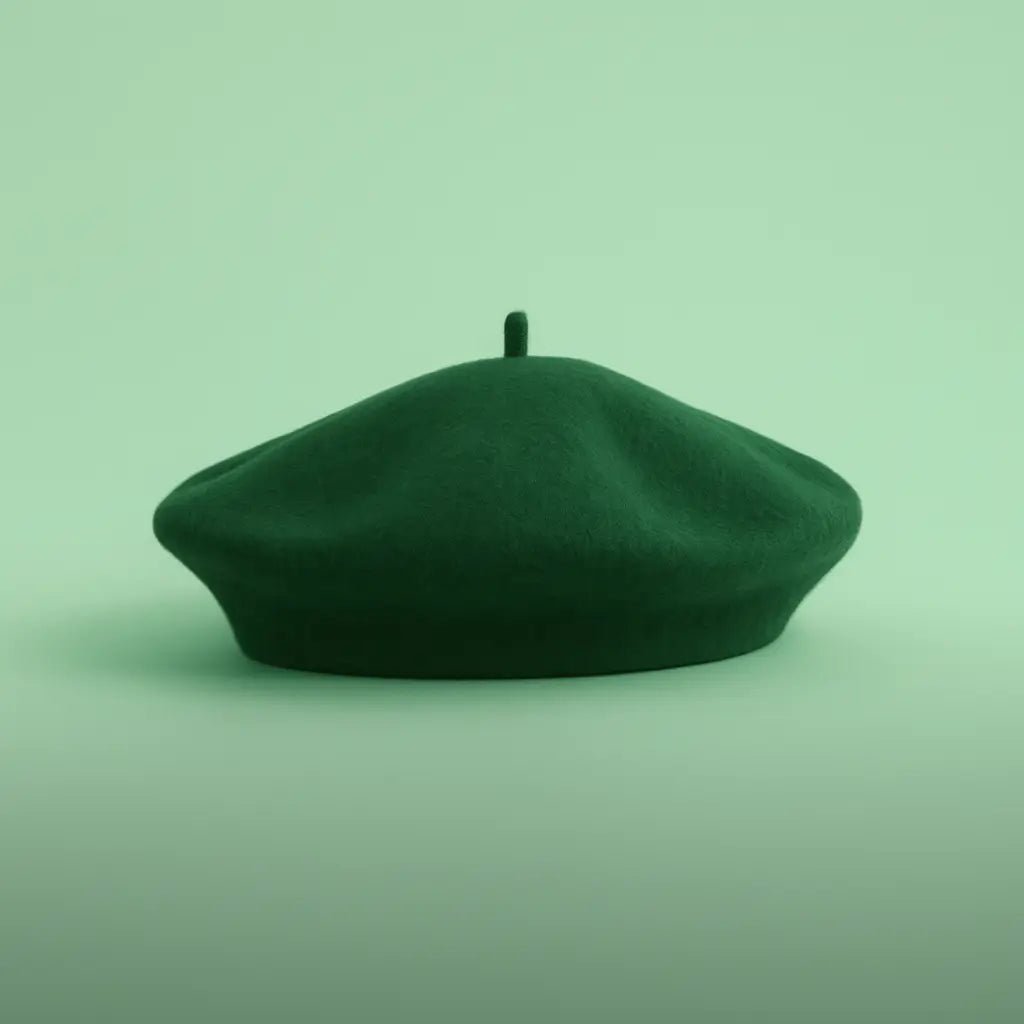
Short answer: there is no single rule, but the classic civilian tilt is to the right. You pull the crown down over one ear and let the other side sit higher, and in everyday French wear that fuller side usually falls right. Militaries are the strict ones. The French army pulls the beret to the left with the badge over the right eye, while British and American units do the opposite.
I am Camille, and I shape and finish berets by hand in the Béarn, which is where the beret comes from. So here is what actually decides the side for most people, what the military conventions really are, and how to make either direction look deliberate rather than accidental.
- In civilian style, a beret goes to whichever side you part your hair away from, and most people land on the right.
- The French military pulls the beret left, with the badge over the right eye.
- British and American units pull it right, with the badge over the left eye.
- Whichever side you pick, the band should sit level and about two fingers above the brows.
- Commit to one direction. A beret that drifts between sides is what reads as sloppy, not the side itself.
Left or right at a glance
Here is the quick comparison, both the tradition and how each side actually looks once it is on your head. The detail on why each convention exists comes right after.
| Direction | Who wears it this way | How it reads |
|---|---|---|
| Pulled right | Most civilian wearers, British and US military | Classic, familiar, the default in photographs |
| Pulled left | French army, air force and gendarmerie | Slightly more formal, a little less common |
| Pulled back | Artists, students, softer everyday looks | Relaxed, shows the hairline, very Parisian |
The civilian rule, which is barely a rule
Outside a uniform, nobody is checking. A beret is cut as a circle of felted wool with a band, so the extra fabric has to go somewhere, and the side you push it toward is the side that gets the drape. That is the whole mechanic. There is no shepherd tradition that fixes it right, and no styling authority that fixes it left.
What does decide it, in practice, is your hair. If you part on the left, pull the beret right so the fabric falls away from the part and your hair stays visible. If you part on the right, pull it left. Following your part is the difference between a beret that frames your face and one that flattens it, and it is the same principle behind the correct way to wear a beret.
Who the classic right tilt suits best
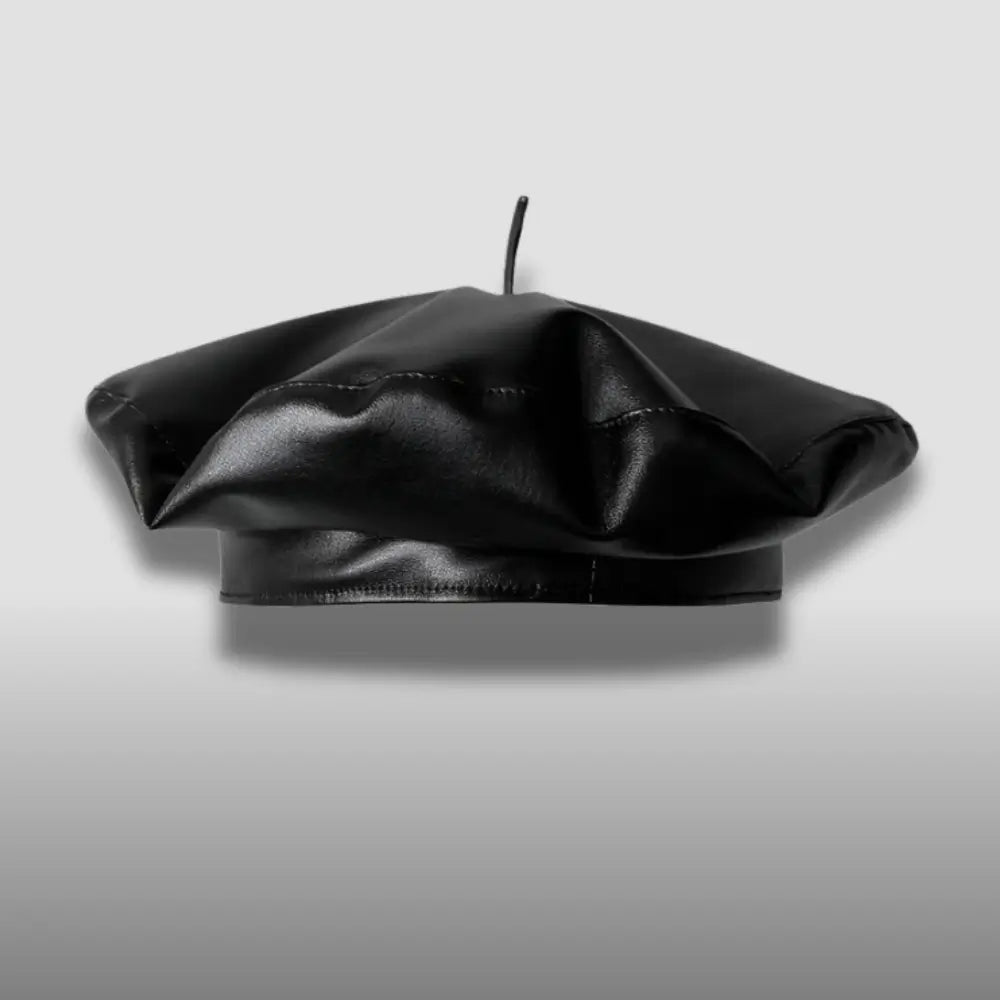
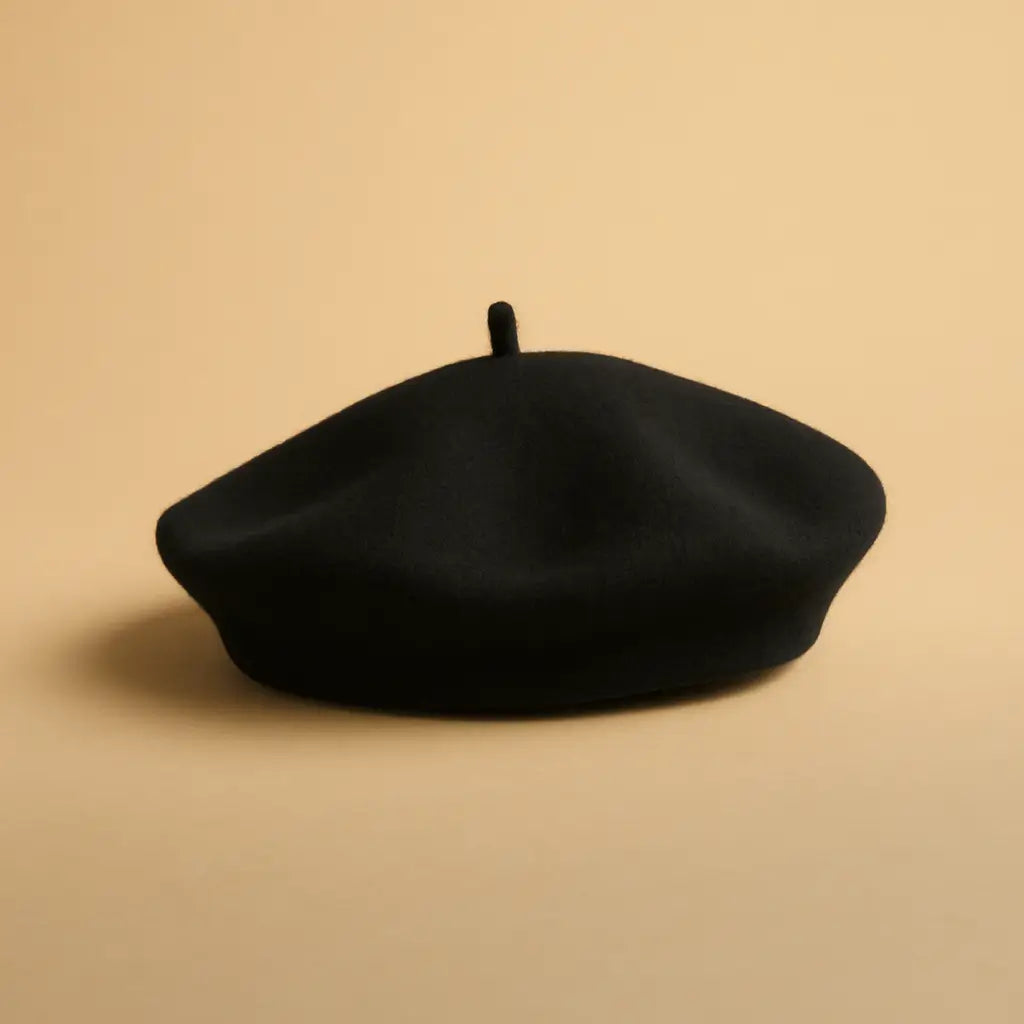
Anyone wearing a beret for the first time, people who part their hair on the left, and anyone who wants the version that looks instantly familiar in a mirror. Black is the shade that makes the tilt easiest to judge, because the shape reads clearly against almost any coat.

★★★★★ 4.8 · 62 reviews
Black French Beret
Soft matte wool that holds a clean tilt all day. The easiest beret to learn the angle on, in either direction.
Shop now · $39Set the band first, then the tilt. Sit the band level across the forehead about two fingers above the brows and level at the back, and only then push the crown to one side. Most berets that look wrong are not tilted wrong, they are banded wrong.
Why the military side is the opposite of what you expect
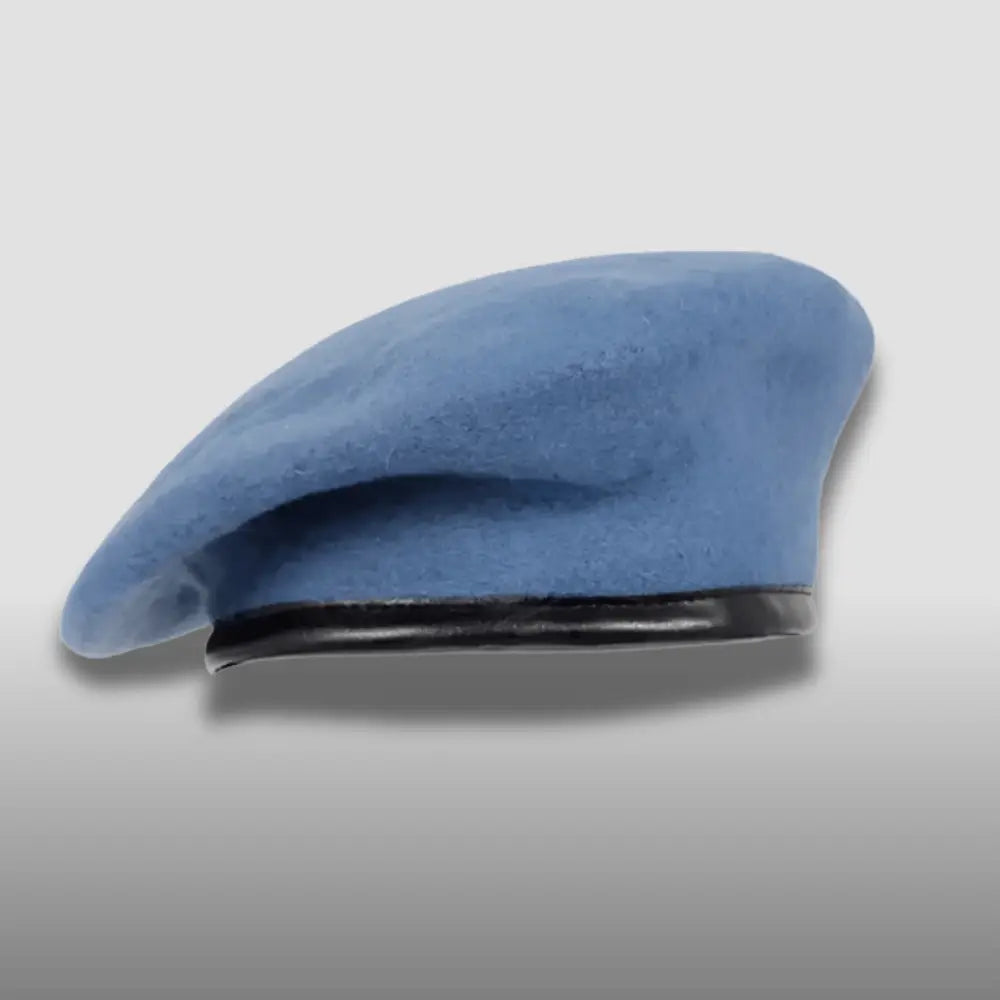
Armies do fix the direction, because a uniform has to look identical across a whole parade. The badge is what the regulation is really about, and the crown simply falls away from it. In the French army, air force and gendarmerie, the insignia sits over the right eye and the fabric is pulled down to the left. In the British and American services, the badge sits over the left eye and the excess is pulled right.
That is why photographs seem to contradict each other. A picture of a French conscript and a picture of a British soldier show two different tilts, and both are correct in their own regulation. The old story that soldiers chose a side to keep a rifle shoulder clear is repeated often, and there is no solid evidence for it, so I would not build your styling around it.
Who a deeper colour suits best
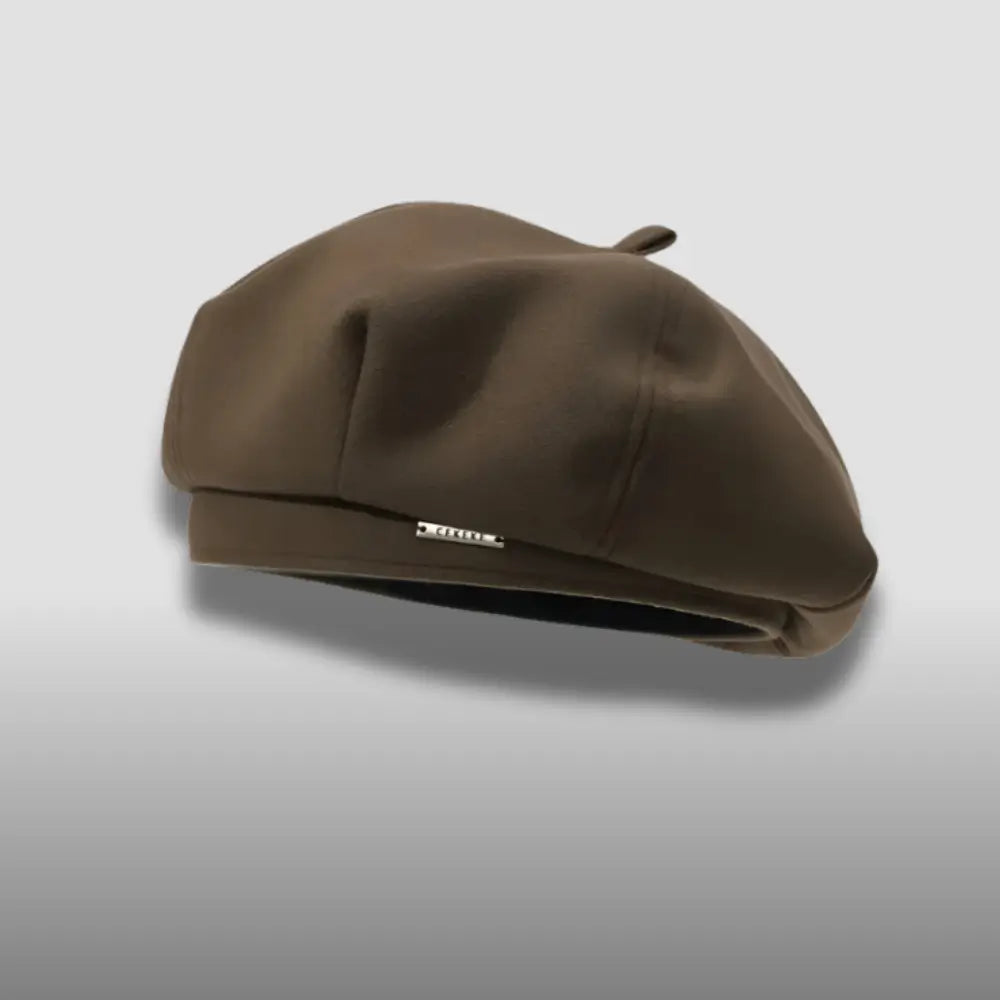
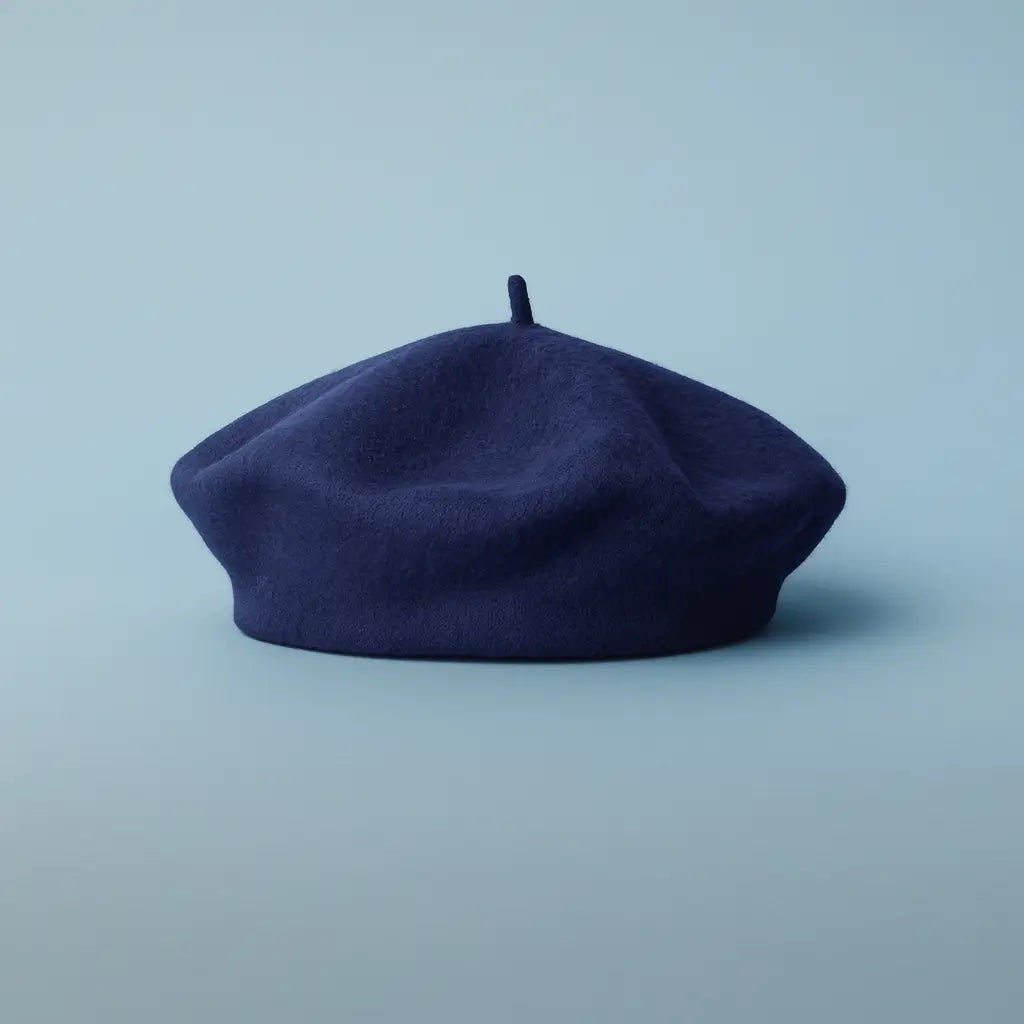
Wearers who like the disciplined look of a military tilt without the uniform, anyone building a beret into a coat and tailoring wardrobe, and shoppers who want a shade with more depth than black but the same easy behaviour.

★★★★★ 4.9 · 75 reviews
Navy Blue Beret
A deep navy that holds a crisp edge when you pull it to one side. Our highest rated classic, and sharp with a coat.
Shop now · $45Finding your own side
The fastest way to settle this is in front of a mirror with two minutes to spare. Put the beret on flat, then try each direction and look at what happens to your face rather than to the hat. One side will open up your features and the other will close them down, and the difference is usually obvious once you look for it.

A few things that make the choice for you, in order of how much they matter:
- Your parting: pull the beret away from the part so your hair still shows.
- Your better side: most people have one they prefer in photographs, so leave that side uncovered.
- Glasses: if a frame arm sits high, tilt away from it so nothing competes at the temple.
- Habit: whichever hand you reach up with will naturally push the beret the same way each time.
Once you have chosen, stay with it. Consistency is what makes a beret look like part of you rather than something you are still negotiating with, and it also stops the crown from stretching unevenly over time. If yours creeps or slides once it is tilted, the fix is usually fit rather than technique, which we cover in how to keep a beret from falling off.
Who a warm neutral suits best
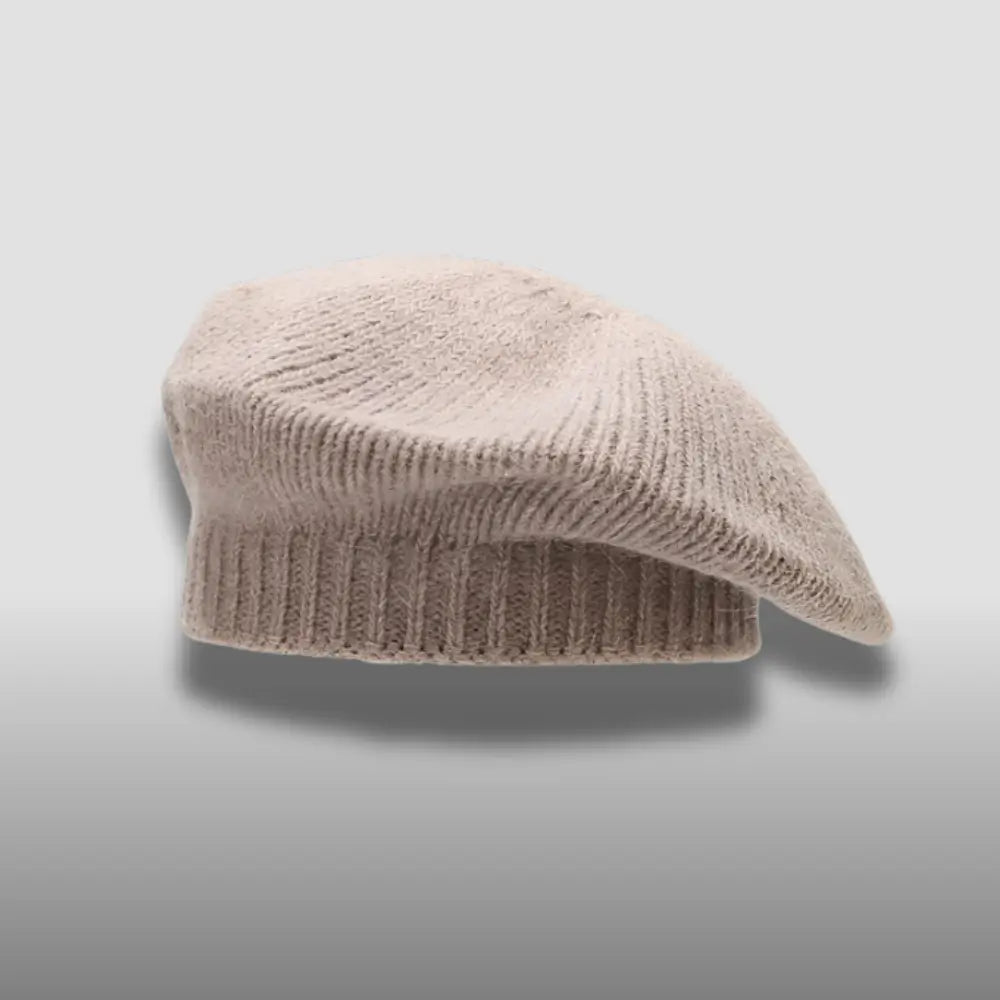
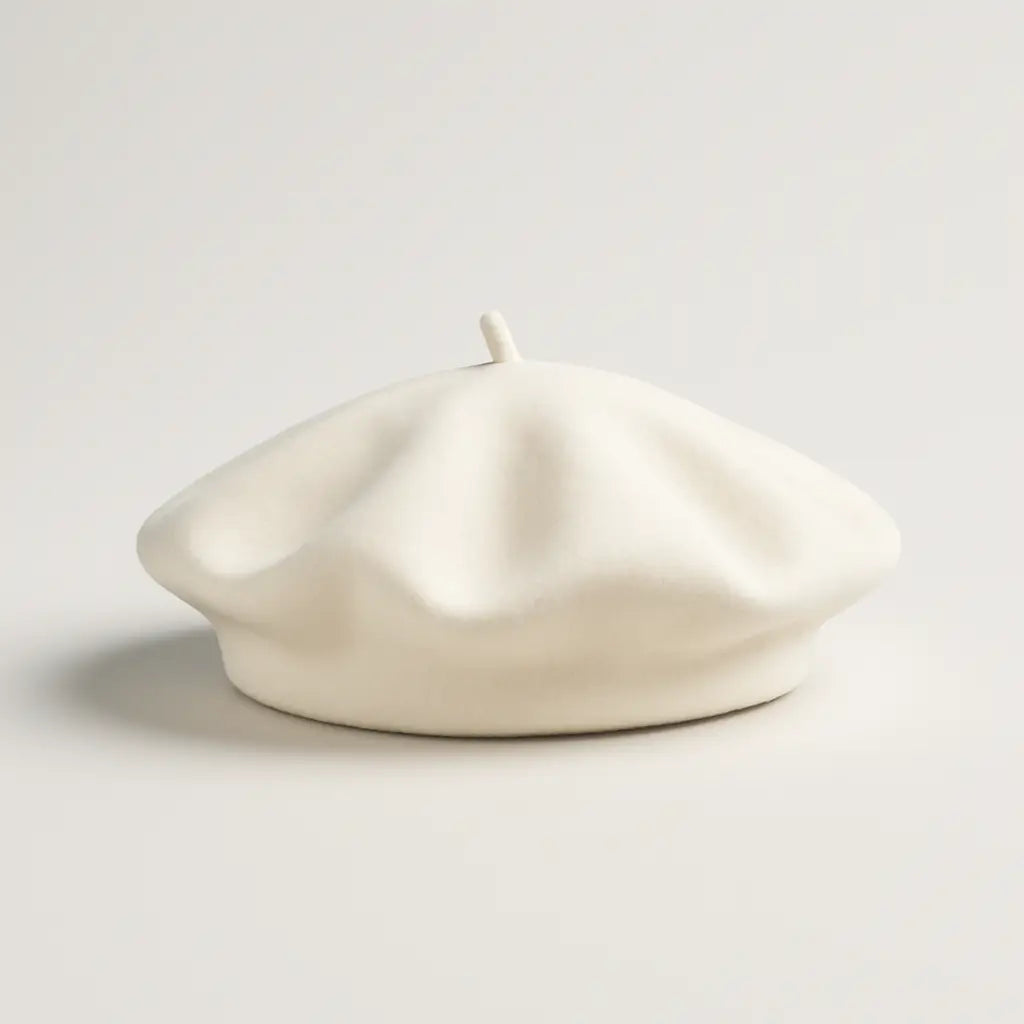
People who want a softer edge than black or navy, anyone with warm colouring, and wearers who like the tilt to look relaxed rather than sharp. A lighter shade shows the drape of the fabric more clearly, which makes the angle easy to see while you are still learning it.

★★★★★ 4.8 · 60 reviews
Beige Wool Beret
Soft cream wool with a gentle drape that shows the tilt beautifully. Warm against camel, grey and denim.
Shop now · $45Keeping the tilt over time
A beret remembers. Wool takes a set from the way you handle it, which works in your favour if you are consistent and against you if you are not. A few habits keep the shape honest for years.
- Take it off by the crown, not the band, so the edge does not stretch on one side.
- Lay it flat or on a rounded surface between wears so the circle stays true.
- Brush the felt in one direction to keep the surface even.
- Let it dry flat and away from heat if it gets caught in rain.
Do not force a permanent tilt by stretching the band over a bowl or pulling it hard to one side while damp. That distorts the headband, and a stretched band never grips again. The tilt should come from how you place it, never from deforming the beret.
Frequently asked questions
For civilian wear, either is correct, and most people tilt to the right. In uniform it is regulated: the French military pulls the beret left with the badge over the right eye, while British and American units pull it right with the badge over the left eye.
French soldiers pull the beret to the left. French civilians follow no rule at all, and in everyday street style the right tilt is the more common of the two.
Not wrong, but it is harder to wear well. Flat on the head, a beret can read like a cap. Pushing it back slightly and to one side gives it the shape people recognise.
Only by habit. You will reach up with your dominant hand and nudge the crown the same way each time, which is why most right handed wearers settle on a right tilt without thinking about it.
No. The shape of the hat behaves the same way on any head. Hair and parting decide the flattering side far more than anything else.
So, left or right? Follow your parting, keep the band level, and then stay with the side you chose. A beret worn the same way every time looks like a decision, and that is the whole point.


Worn well, never overthought.
Camille