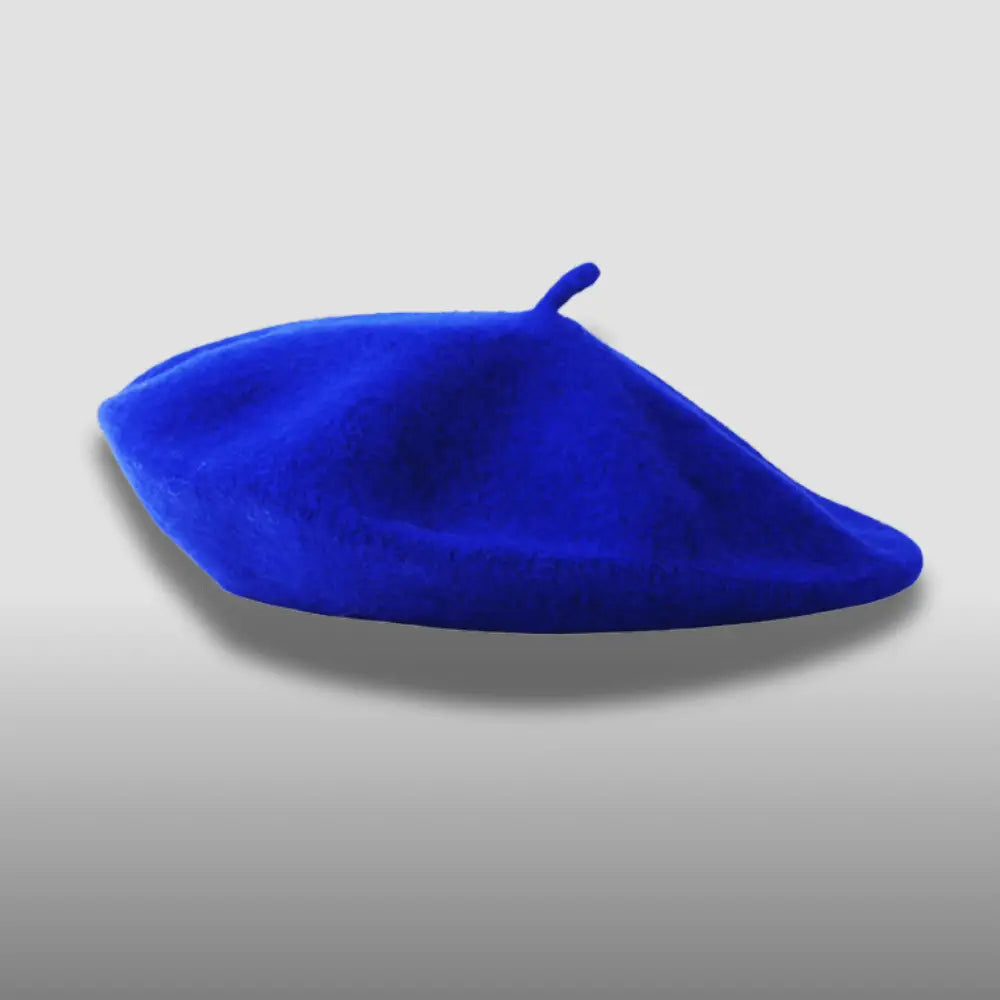
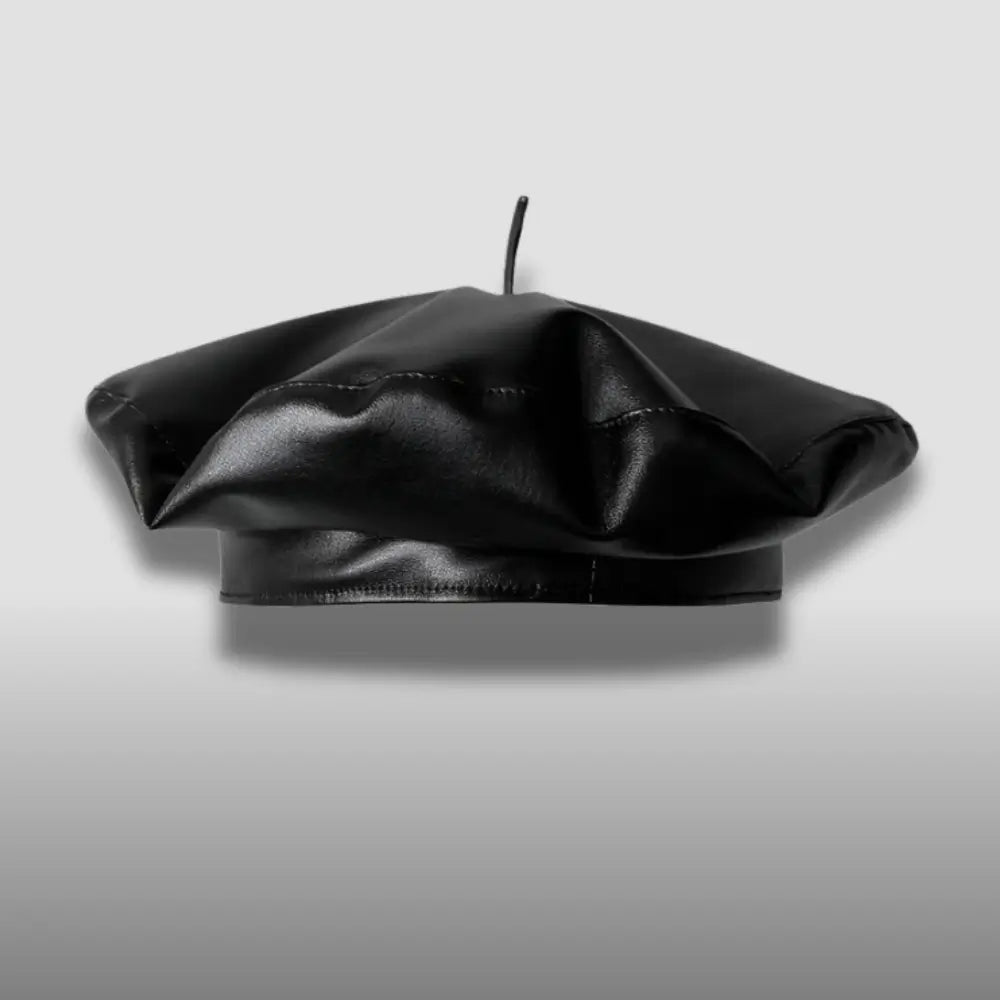
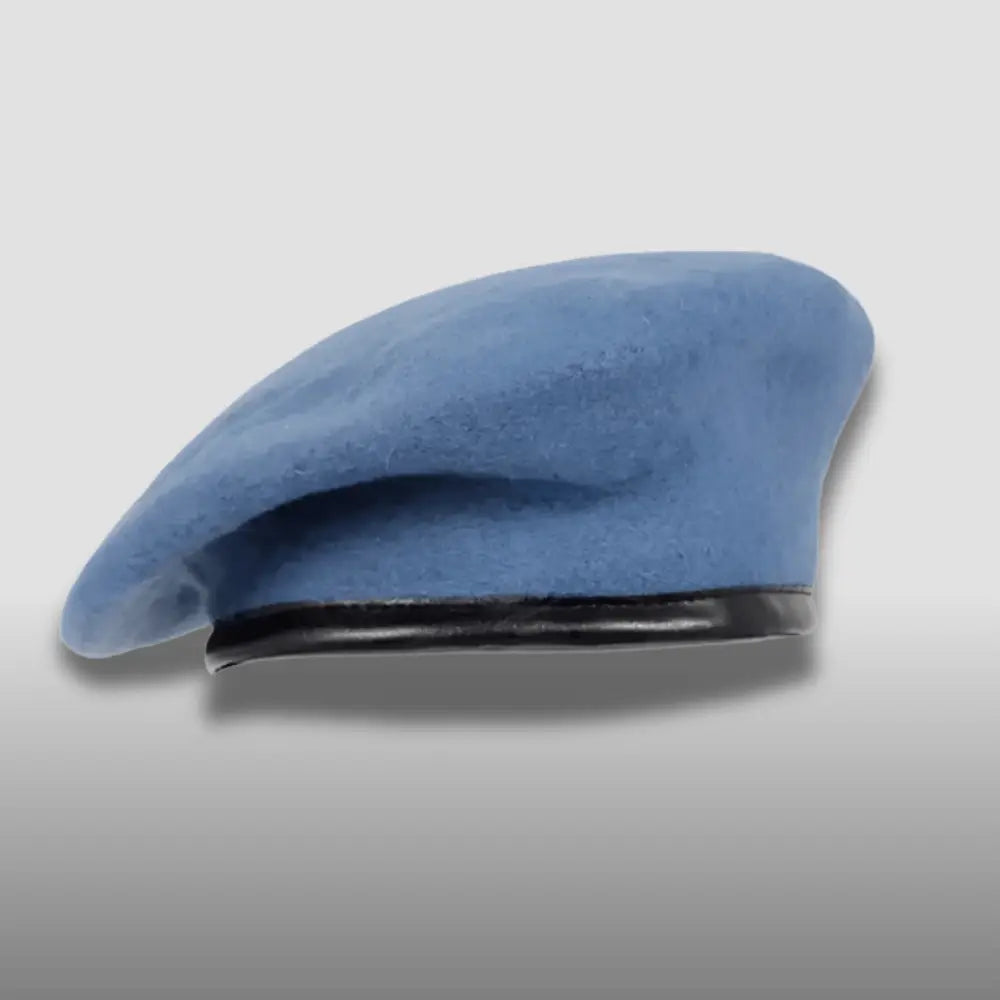
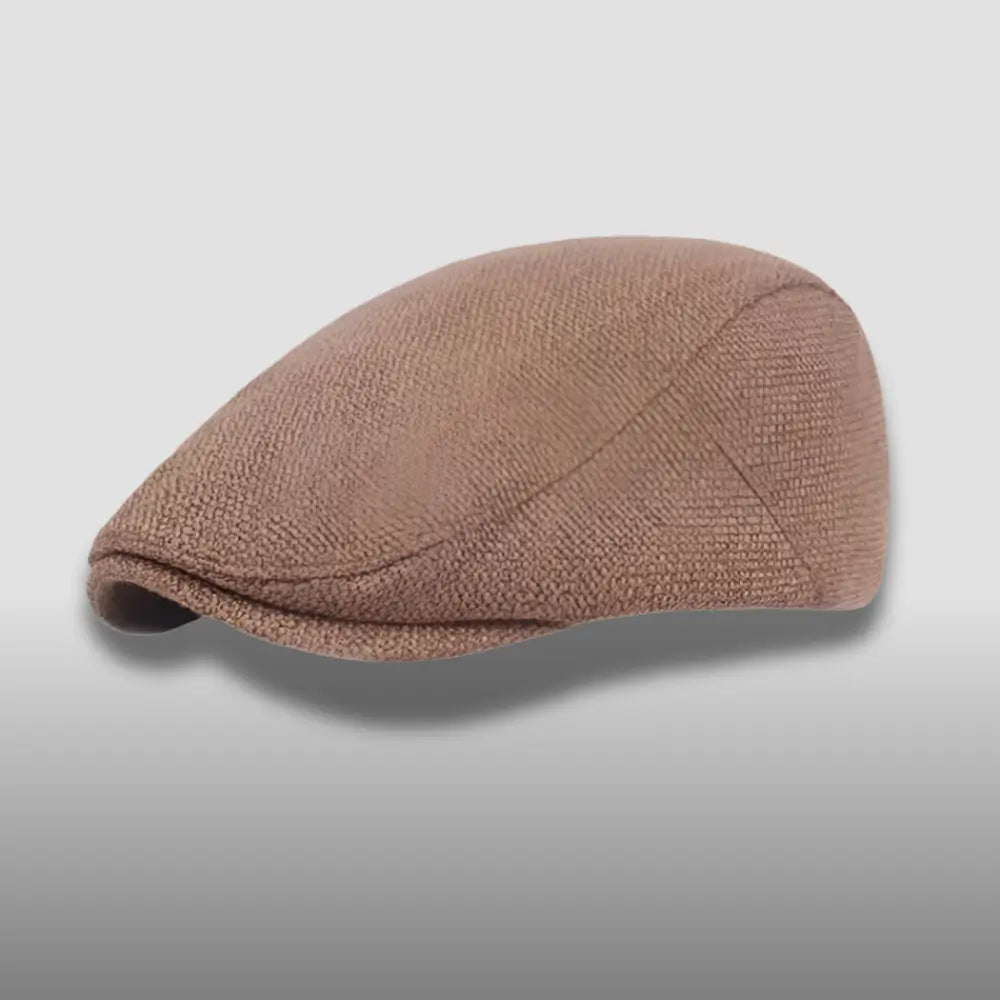
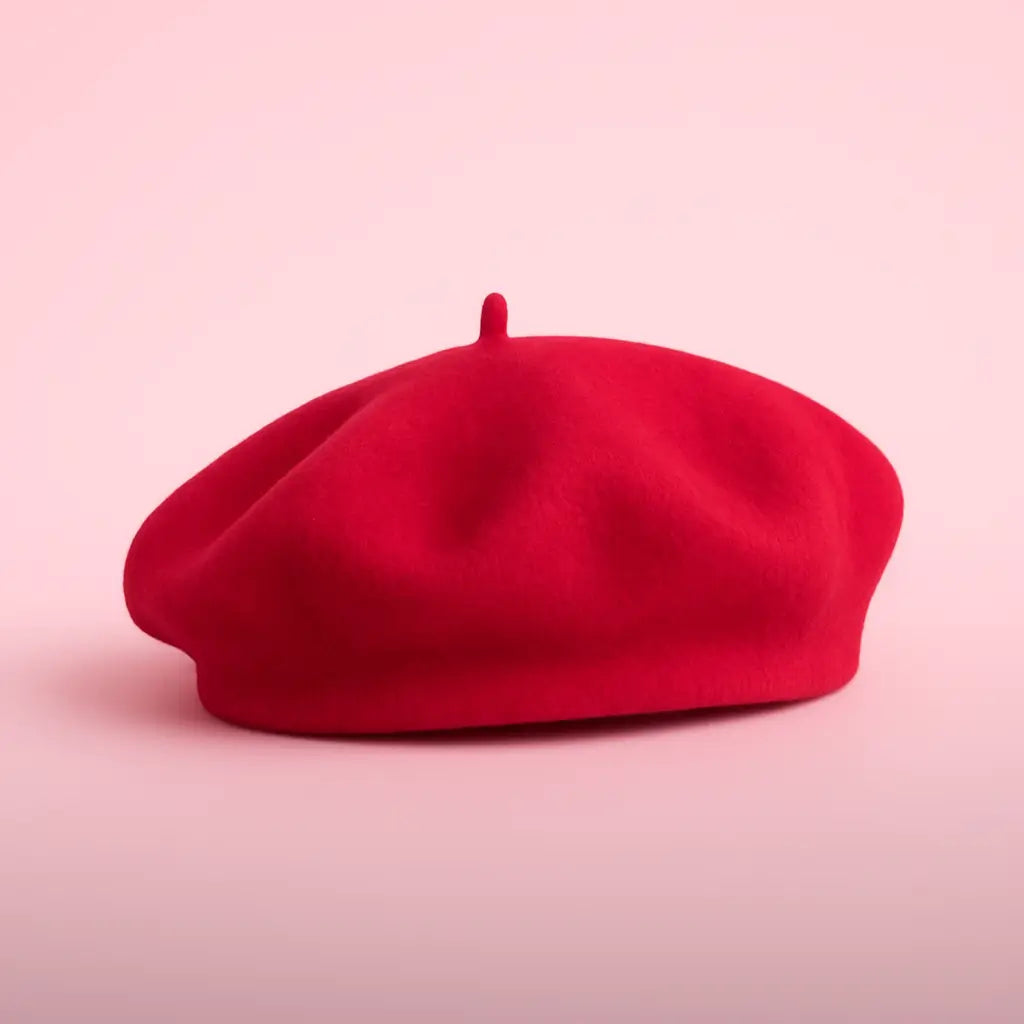
Short answer: wool is the best fabric for a beret for most people, most of the year. It keeps you warm, holds its shape, keeps its colour and moulds to your head. It is also the fabric the original French beret was made from, so it looks right by default. Cotton and lighter blends earn their place in warm weather, but if you buy one beret, buy a good wool one.
I am Camille, and I shape and finish berets by hand in the Béarn tradition. I have felted, steamed and worn every fabric a beret comes in, so this is how each one actually behaves once it is on your head, not just how it reads on a label.
- Wool is the best all-round beret fabric: warm, durable, and it holds its shape.
- Merino and lambswool are the softest wools, worth the small extra cost.
- Cotton is lighter and more breathable, better for mild and warm days.
- Canvas and denim are sturdier and more casual, with a structured look.
- Match the fabric to your climate first, then to the look you want.
Beret fabrics at a glance
Short on time? This is how the main beret fabrics compare on warmth, weight and how they wear. The detail on each one, and the beret I would pick, comes right after.
| Fabric | Best for | How it feels |
|---|---|---|
| Wool | Autumn, winter, everyday | Warm, soft, holds its shape |
| Merino / lambswool | Sensitive skin, cold days | Finest, softest, cosy |
| Cotton | Spring, mild weather | Light, breathable, casual |
| Canvas / denim | A sturdier, casual look | Structured, hard-wearing |
Wool: the classic choice
Wool is the traditional beret fabric, and it earns that place. It insulates well, so it keeps your head warm through cool and cold weather, and it is hard-wearing enough that a good wool beret lasts for years. It also moulds gently to your head over the first few wears, so the fit gets more comfortable the more you reach for it.
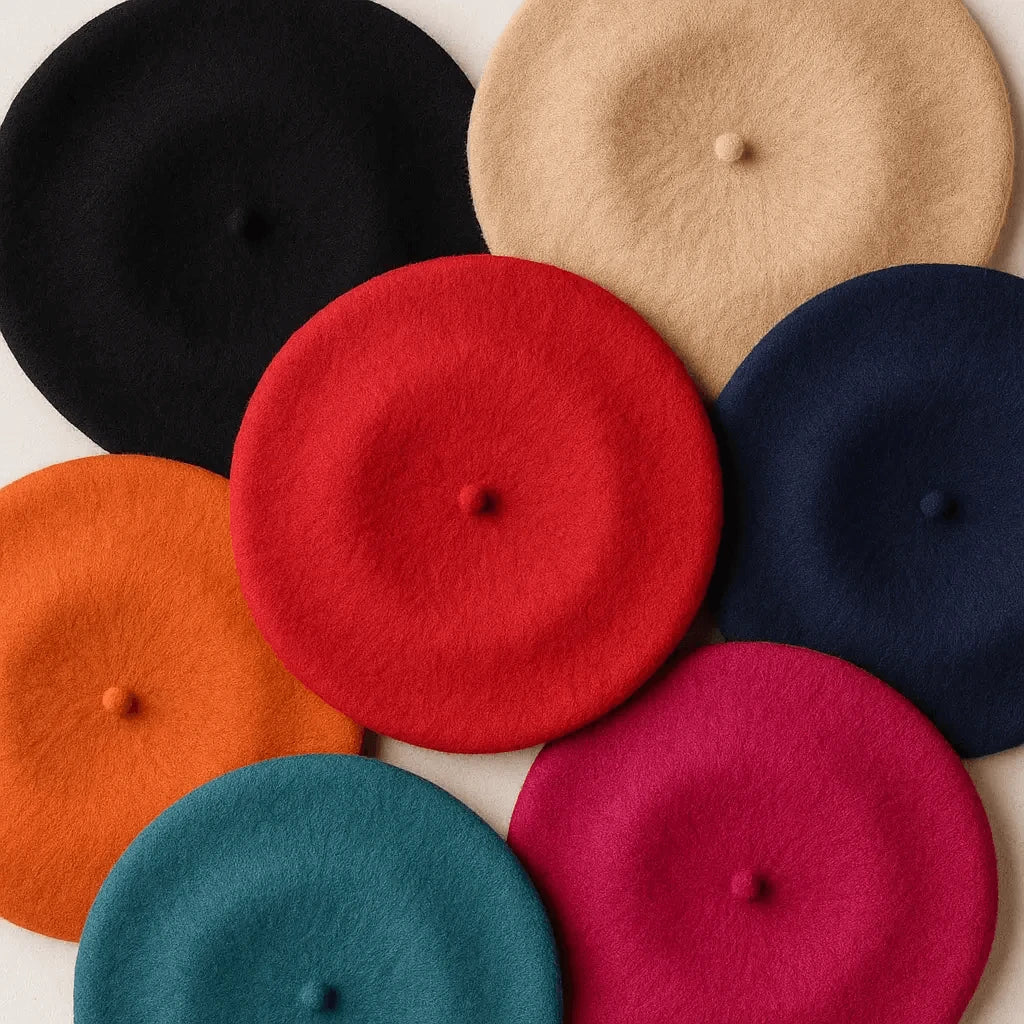
The other quiet advantage is how wool takes colour. A wool beret holds a deep, even shade far better than most fabrics, which is why the richest beret colours are almost always wool. If you are still weighing shades, our guide on what beret colors mean is a good next read.
Who a wool beret suits best
Anyone who wants one beret that works most of the year, people in a cool or changeable climate, and dressers who want that unmistakable classic French look.

★★★★★ 4.8 · 60 reviews
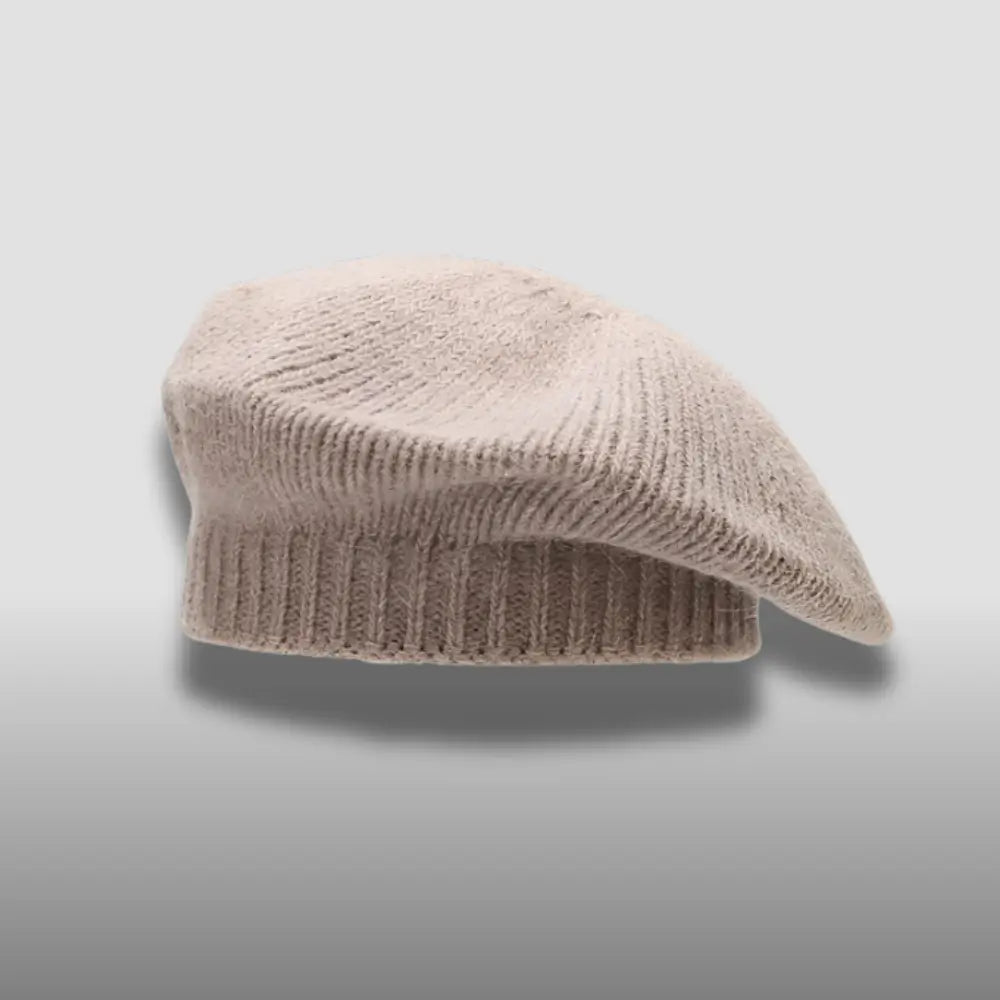
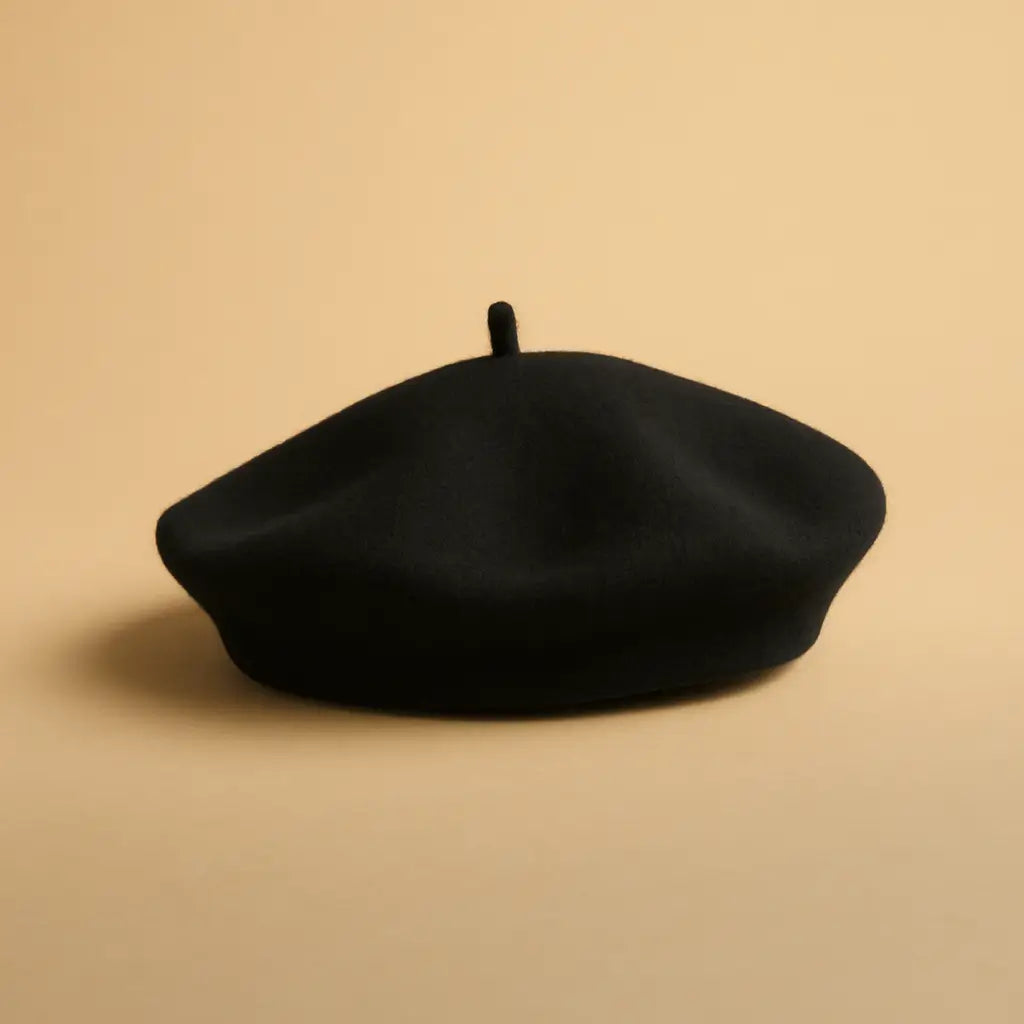
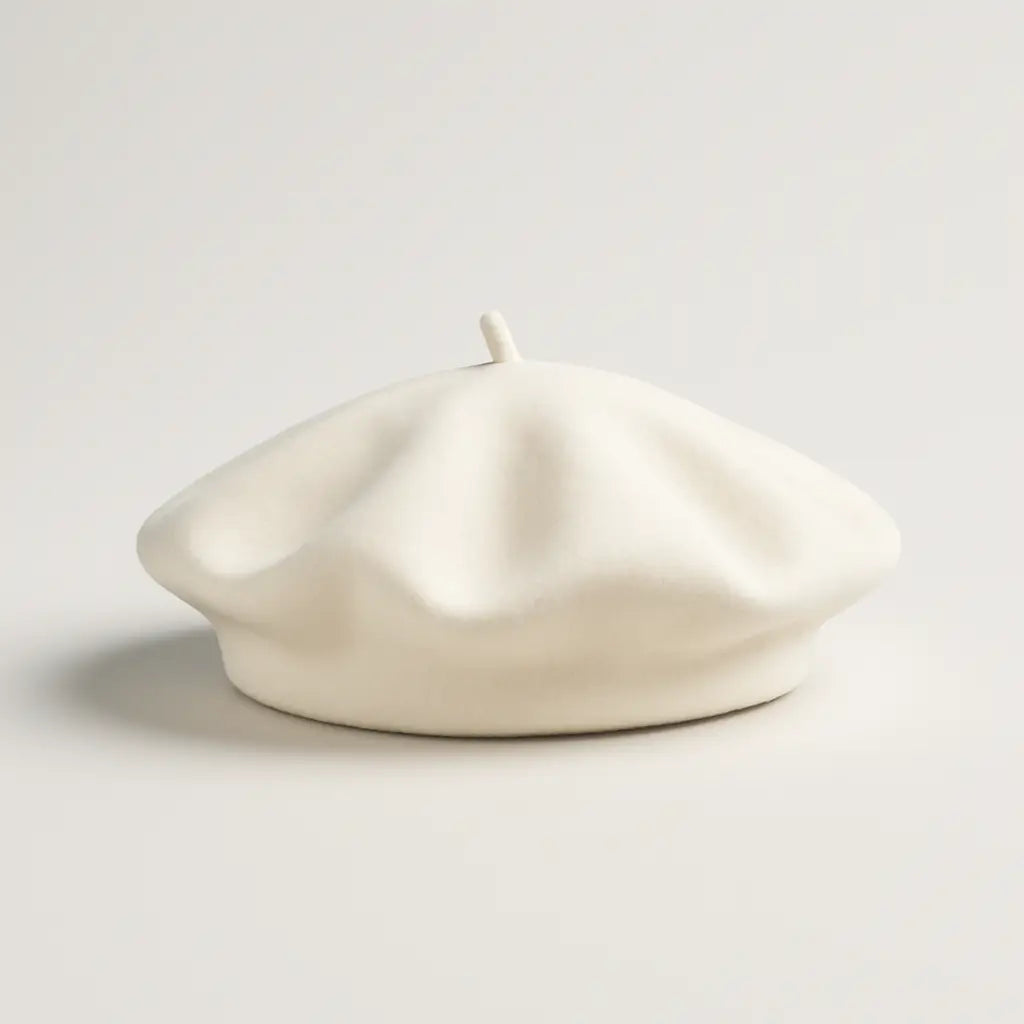
Beige Wool Beret
Soft, warm wool in a neutral cream that goes with everything. The easiest wool beret to start with.
Shop now · $45If your skin reacts to ordinary wool, choose merino or lambswool rather than avoiding wool altogether. The fibres are much finer, so they sit soft against the forehead instead of prickling. You keep all the warmth and shape of wool without the scratch.
Merino and lambswool: the softest wools
Merino and lambswool are the fabrics to reach for when softness matters most. Merino has very fine fibres, so it feels smooth against the skin and breathes well, which keeps your head comfortable even when the temperature swings through the day. Lambswool comes from the first shearing, so it is exceptionally soft and cosy while still insulating like classic wool.
They cost a little more than standard wool, and they are worth it if you wear a beret often or have a sensitive forehead. A fine wool beret in a rich colour is the piece most people end up wearing far more than they expected.
Who a fine wool beret suits best
Anyone with sensitive skin, daily beret wearers, and shoppers who want the softest possible version of a classic wool beret.

★★★★★ 4.8 · 89 reviews
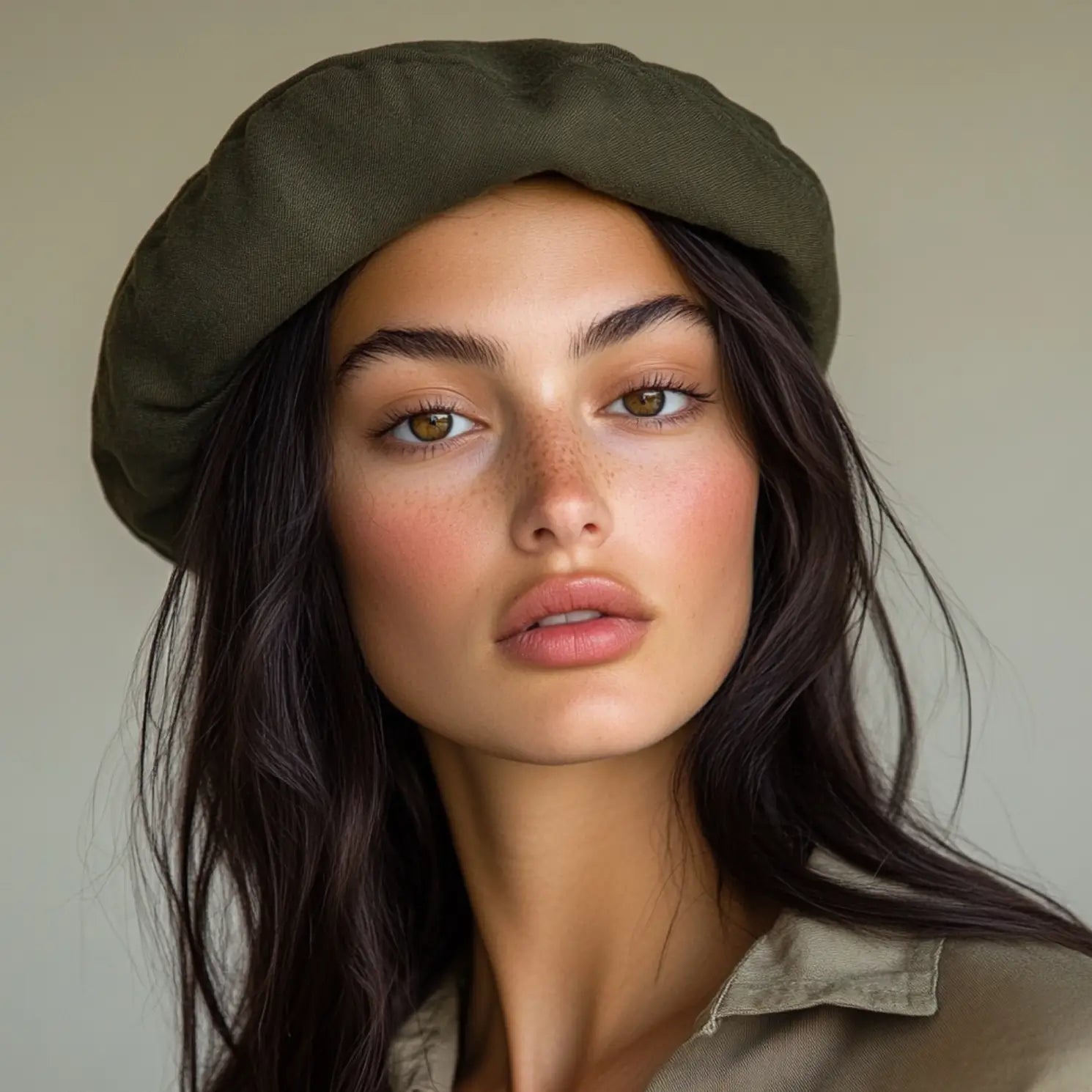
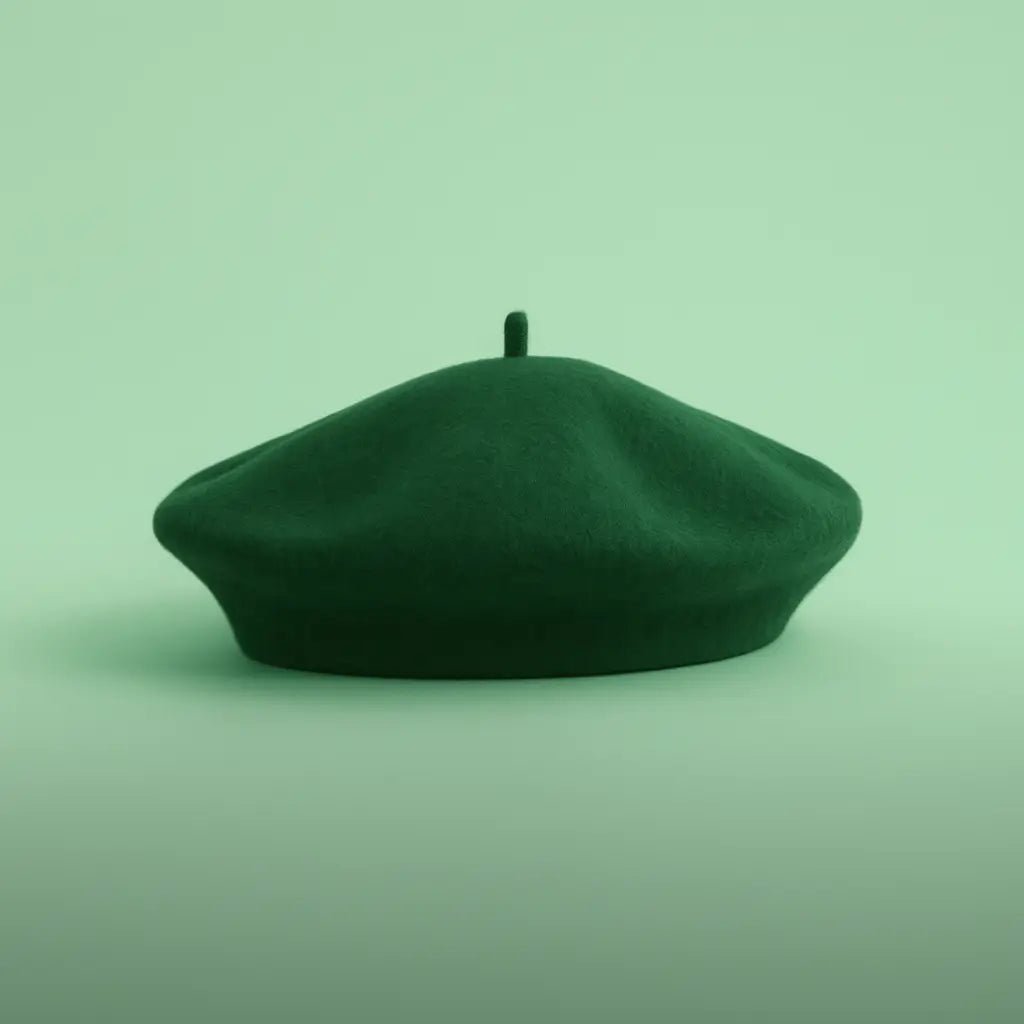
French Green Beret
A deep forest green in soft wool, and our most reviewed shade. Warm, rich and easy to wear with neutrals.
Shop now · $45Cotton: light and breathable
Cotton is the fabric to look at when the weather warms up. It is lighter than wool and lets air move, so it sits comfortably on a mild spring day or a cool summer evening when a wool beret would feel like too much. It is soft, easy on sensitive skin, and gives a more relaxed, casual look than a crisp wool felt.
The trade-off is that cotton does not insulate the way wool does, and it holds a slouchy shape rather than a sharp one. That is a feature in warm weather and a drawback in the cold, which is why most people who wear berets year round keep one wool and one lighter beret in rotation.

Whichever fabric you land on, the colour you choose does most of the work in an outfit. A brighter beret keeps a light-weather look fresh, while a deep tone anchors a winter coat.
Who a lighter beret suits best
Anyone who wants a beret for spring and mild days, people who prefer a soft, casual drape, and wearers who like a brighter, easygoing colour.

★★★★★ 4.8 · 62 reviews
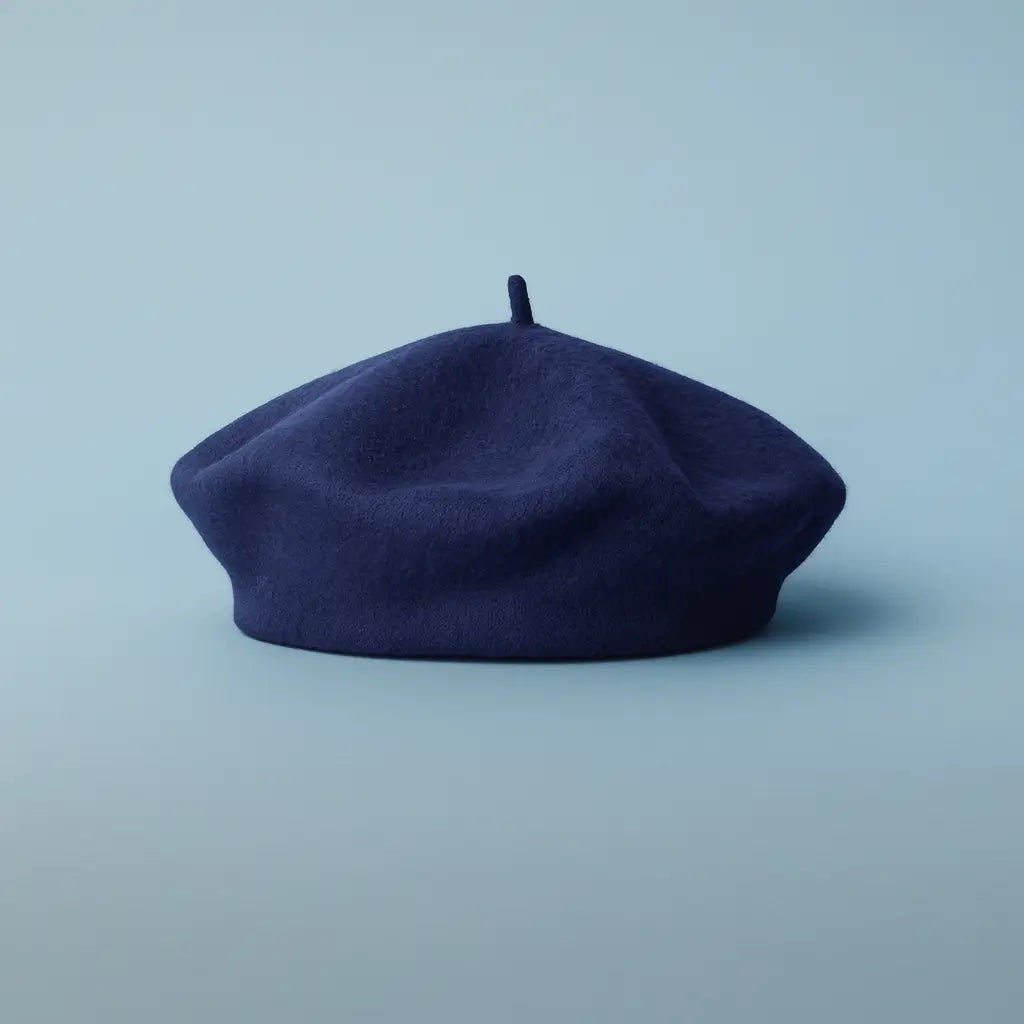
Blue French Beret
A vibrant royal blue with a soft, easy drape. The kind of bright, lighter beret that lifts a spring outfit.
Shop now · $45Canvas and denim: sturdy and casual
Canvas and denim sit at the hard-wearing end of the range. Both are heavier cotton weaves, so they hold a firmer, more structured shape and stand up to daily knocks. Denim also softens and moulds the more you wear it, which gives it that lived-in, personal feel over time.
They are the most casual berets you can wear, better with jeans and a jacket than with anything tailored. Spot clean them with a damp cloth rather than soaking them, since heavy submersion pulls the shape out.
So, which fabric should you choose?
If you want one beret that covers most of the year, choose wool, and choose merino or lambswool if softness matters to you. Add a lighter cotton beret when you want something for spring and warm days, and keep canvas or denim for a sturdier, casual look. Climate first, then colour, then the finish you like.
- Cold and everyday: a classic wool beret in a deep, rich shade.
- Sensitive skin: fine merino or lambswool over standard wool.
- Warm and mild days: a lighter cotton beret with a soft drape.
- Casual and hard-wearing: canvas or denim with jeans.

★★★★★ 4.9 · 75 reviews
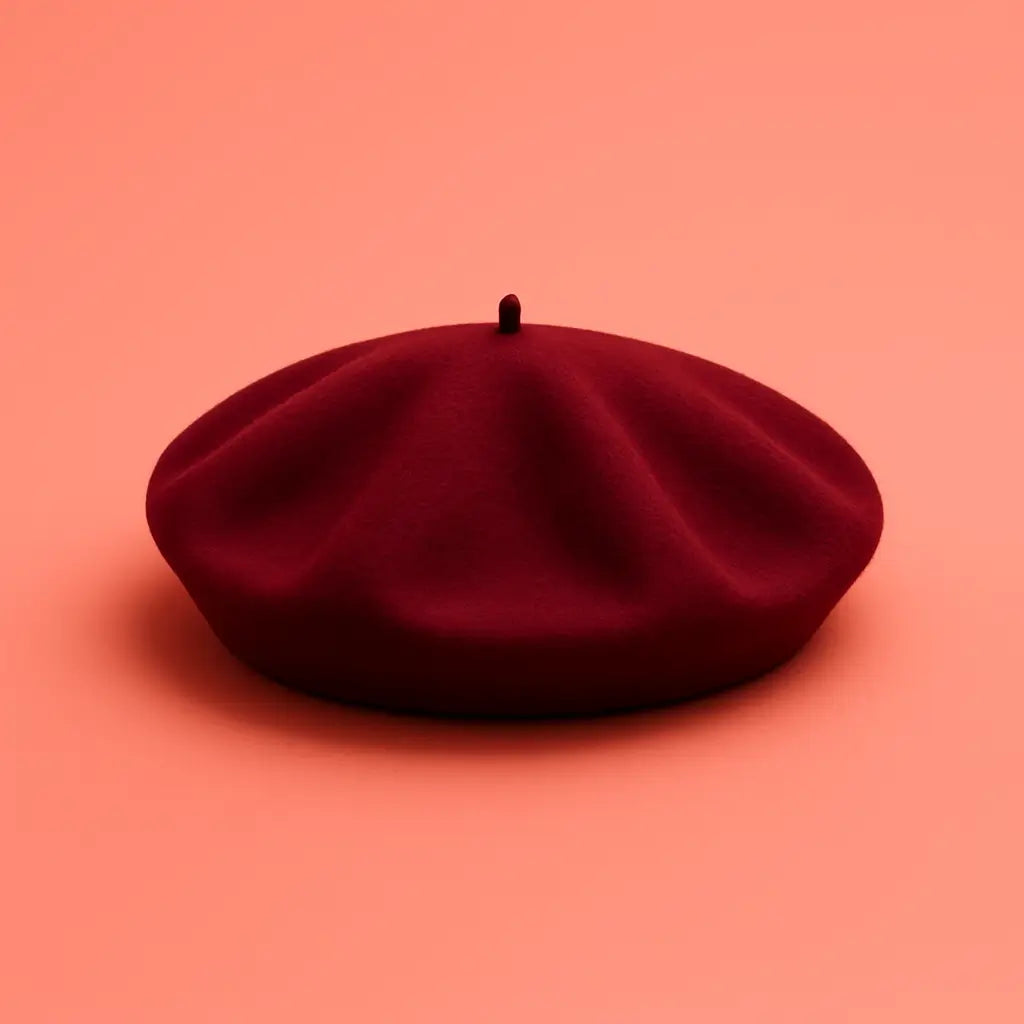
Navy Blue Beret
Our top-rated wool all-rounder. Navy goes with as much as black but feels a touch softer against most outfits.
Shop now · $45Caring for your beret fabric
The fabric decides the care, and a few minutes of it keeps a beret looking new for years.
- Wool and fine wool: hand wash gently in cool water, then lay flat to dry in shape.
- Cotton: hand wash or a gentle cold cycle, then reshape damp and air dry.
- Canvas and denim: spot clean with a damp cloth and mild soap, never soak.
- Store any beret flat or on a rounded surface so the crown keeps its shape.
For the full routine on lifting marks and keeping colour, our step by step on how to clean a beret covers each fabric in turn.
Never machine wash a wool beret on a warm cycle or tumble dry it. Heat and agitation felt and shrink the fibres permanently, and a shrunk wool beret cannot be stretched back. Cool water and flat drying only.
Frequently asked questions
Wool, for most people. It is warm, durable, holds its shape and gives the classic French look. Merino or lambswool are the softest versions, and cotton is the better pick for mild, warm weather.
Standard wool can feel slightly scratchy on a sensitive forehead. Fine merino or lambswool solve that, since the fibres are much finer and sit soft against the skin.
Not really. Cotton is light and breathable, which is ideal for spring and mild days but not for cold weather. Choose wool once the temperature drops.
Good wool, canvas and denim all wear well for years with basic care. Wool holds colour and shape best, while canvas and denim are the toughest against knocks.
If you wear a beret year round, a wool one plus a lighter cotton one covers almost every day and season between them.
So, what is the best fabric for a beret? Wool for warmth and that classic shape, a fine wool if you want it softest, and cotton for the mild days in between. Choose for your climate first and the rest falls into place.


Worn well, never overthought.
Camille