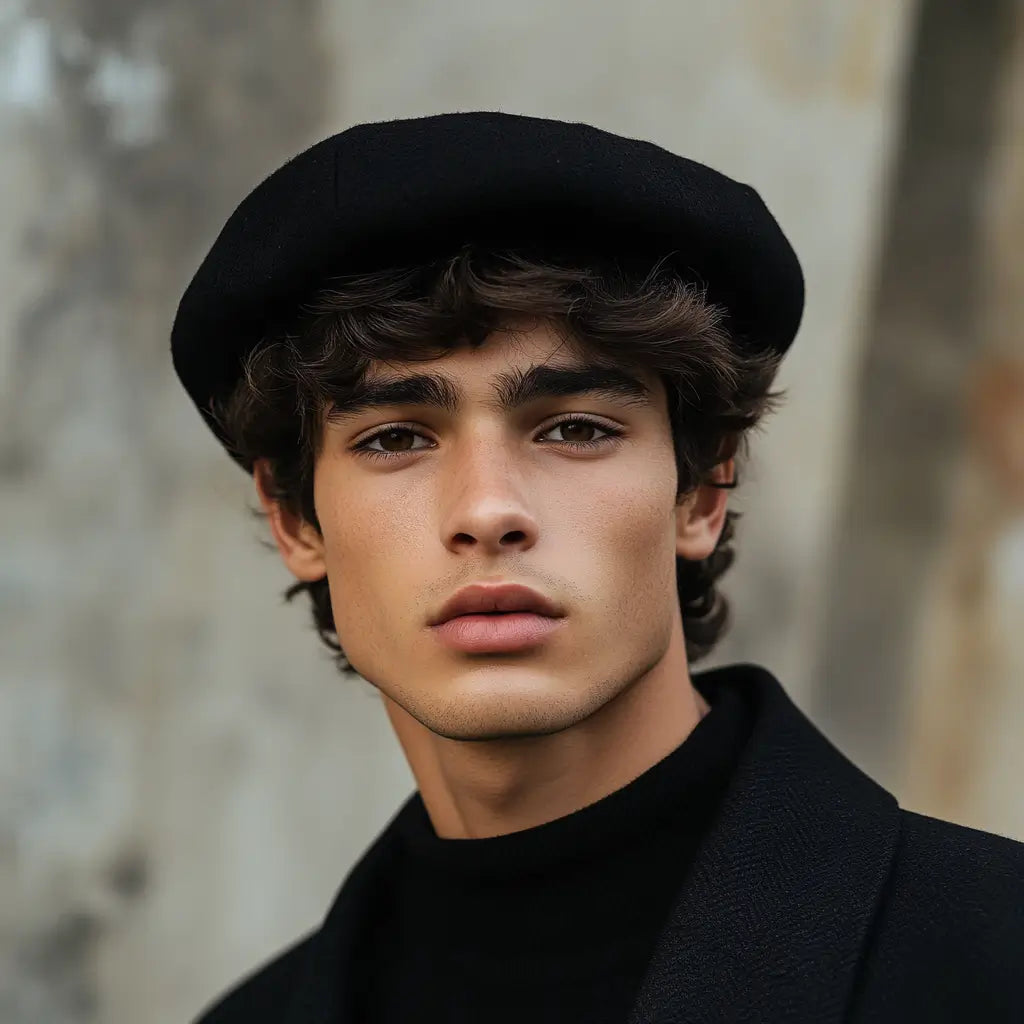
Short answer: the modern history of the French beret is the story of a working hat that kept being adopted by people who wanted to say something. Soldiers, painters, jazz musicians, filmmakers and activists all reached for the same wool circle, and each one left a mark on what it means today.
I am Camille, third generation in a family that has shaped berets by hand in the Béarn. The history below is not just dates. It is the reason the shape barely changed while the meaning changed constantly, and why a French beret still reads as considered rather than costumed.
- The modern beret story starts with French military adoption in the late 1800s.
- Paris artists in the 1900s to 1930s turned it into a creative signature.
- Post-war cinema and the Beat generation gave it glamour and edge in one decade.
- Designers brought it onto runways from the 1960s onward, and it never left.
- Today it carries all of that history at once, which is why it never looks dated.
The modern era at a glance
Short on time? This is how the beret's meaning shifted decade by decade in the modern period. Each stage gets its own section below, with the products that carry that look best.
| Period | Who wore it | What it signalled |
|---|---|---|
| 1880s to 1910s | French Alpine troops | Discipline and practicality |
| 1900s to 1930s | Painters and writers in Paris | Creative independence |
| 1940s to 1950s | Film stars and post-war Paris | Understated glamour |
| 1950s to 1960s | Beat writers and jazz musicians | Counterculture |
| 1960s to now | Designers and everyday wearers | Timeless style |
The military chapter that set the shape
The modern beret begins with a uniform decision. When the French army issued berets to its Alpine troops in the late 1800s, it took a regional Pyrenees hat and standardised it: consistent sizing, consistent wool weight, consistent finish. That standardisation is the reason a beret bought today still fits the way one from a century ago did.
The military connection also fixed the tilt. Soldiers pulled the crown to one side so the badge sat cleanly over the opposite eye, and that angle became the default way to wear one long after anyone stopped wearing badges. Nearly every styling instinct people have about berets traces back to a uniform regulation rather than a fashion choice.
Who this chapter suits best
Anyone drawn to structure and a beret that holds a defined shape, rather than one that sits soft and slouchy on the head.

★★★★★ 4.8 · 52 reviews
Dark Grey Beret
A firm, structured felt that holds its tilt cleanly. The closest thing in our range to the disciplined military silhouette.
Shop now · $45If you like the historical look but not the uniform association, keep the tilt and drop the structure. A softer wool worn at the same angle reads as Parisian rather than military, with no change in how you actually put it on.
Paris, painters and the creative decades
Between roughly 1900 and 1930, the beret moved from barracks to studios. Montmartre and Montparnasse were full of painters working in cold rooms, and a wool beret solved that problem cheaply. Pablo Picasso wore one for most of his adult life, and the photographs did the rest of the work.
Writers picked it up for similar reasons and different effect. Ernest Hemingway wore a beret during his Paris years, as did much of the expatriate circle around him. None of them invented the look. They borrowed a local working hat and, by being photographed constantly, turned it into shorthand for the creative life. Our piece on why painters wear a beret follows that thread in more detail.

★★★★★ 4.8 · 89 reviews
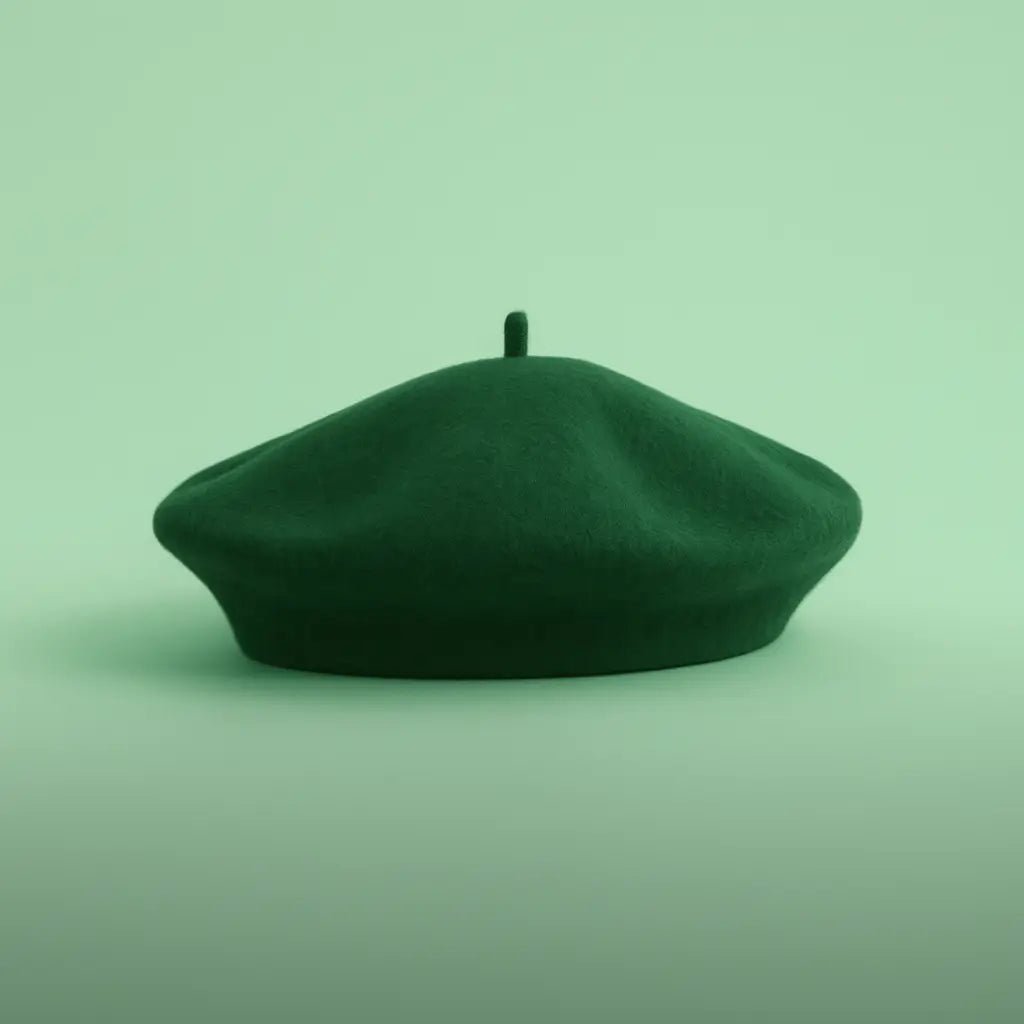
French Green Beret
Deep, characterful green with a soft hand. The kind of colour that looks lived in rather than new, which is exactly the studio look.
Shop now · $45Post-war glamour and the counterculture turn
After the war, the beret took two directions at once. In French cinema it became quietly glamorous, worn by actresses in a way that read as effortless rather than dressed. At the same time, across the Atlantic, Beat writers and jazz musicians adopted it as a marker of standing deliberately outside the mainstream.

Those two meanings should have cancelled each other out. Instead they stacked, which is the beret's real trick. A hat that can read as elegant on one head and rebellious on another has an unusually wide range, and that range is why designers kept returning to it through every decade that followed. If you want the fuller list of names attached to it, we cover them in who famously wore a beret.
Who this era suits best
Wearers who want a beret that can go either way, dressy or offhand, depending only on what they put with it.

★★★★★ 4.9 · 75 reviews
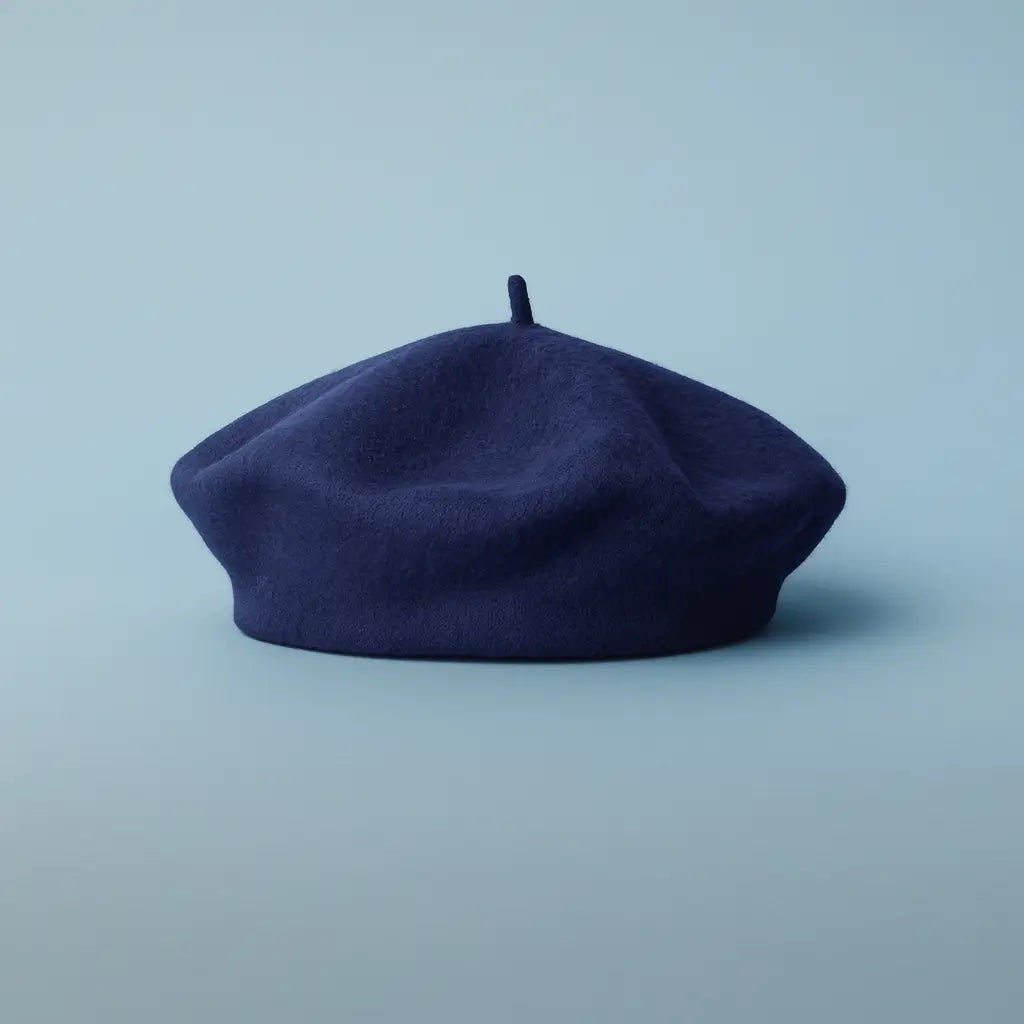
Navy Blue Beret
The most adaptable shade we make. Reads smart with tailoring and relaxed with denim, with no change to the beret itself.
Shop now · $45Why the beret never went out of style
Most accessories that carry this much history end up looking like period costume. The beret avoided that, and the reason is mostly structural. There is nothing decorative to date: no brim shape to go in and out, no hardware, no proportion that belongs to one decade.
- The shape has no era. A flat wool circle looked the same in 1890 and looks the same now.
- It scales to the outfit. The same beret dresses up or down with no adjustment.
- Colour does the work. Changing the shade changes the whole read, which keeps it current.
Be careful with novelty versions that lean hard on one historical reference. A beret loaded with badges, oversized embellishment or costume detail loses the neutrality that made the original work. Keep the base plain and let your outfit carry the character.
Frequently asked questions
It runs from French military adoption in the late 1800s, through the Paris art scene of the early 1900s, post-war cinema and the Beat generation, to its steady place on runways and in everyday wardrobes today.
Painters and writers in early 1900s Paris wore them constantly, partly for warmth in unheated studios. Being photographed in them so often tied the hat to creative work permanently.
Its popularity has risen and fallen, but it never disappeared. The shape has no era-specific detail to date it, so it re-enters fashion easily every time it comes back around.
Yes, though it is worn worldwide now. The association with France comes from the army adopting it nationally and from Paris making it visible, not from the hat being worn only there.
Black and dark neutrals carry the longest thread, from military issue through the Paris studios to the Beat era. Colour berets are a more recent, purely stylistic development.
So that is the modern history of the French beret: a working hat that kept getting borrowed, and improved its reputation every time. You do not need to know any of it to wear one well. But knowing it explains why such a simple thing carries so much weight.


Worn well, never overthought.
Camille