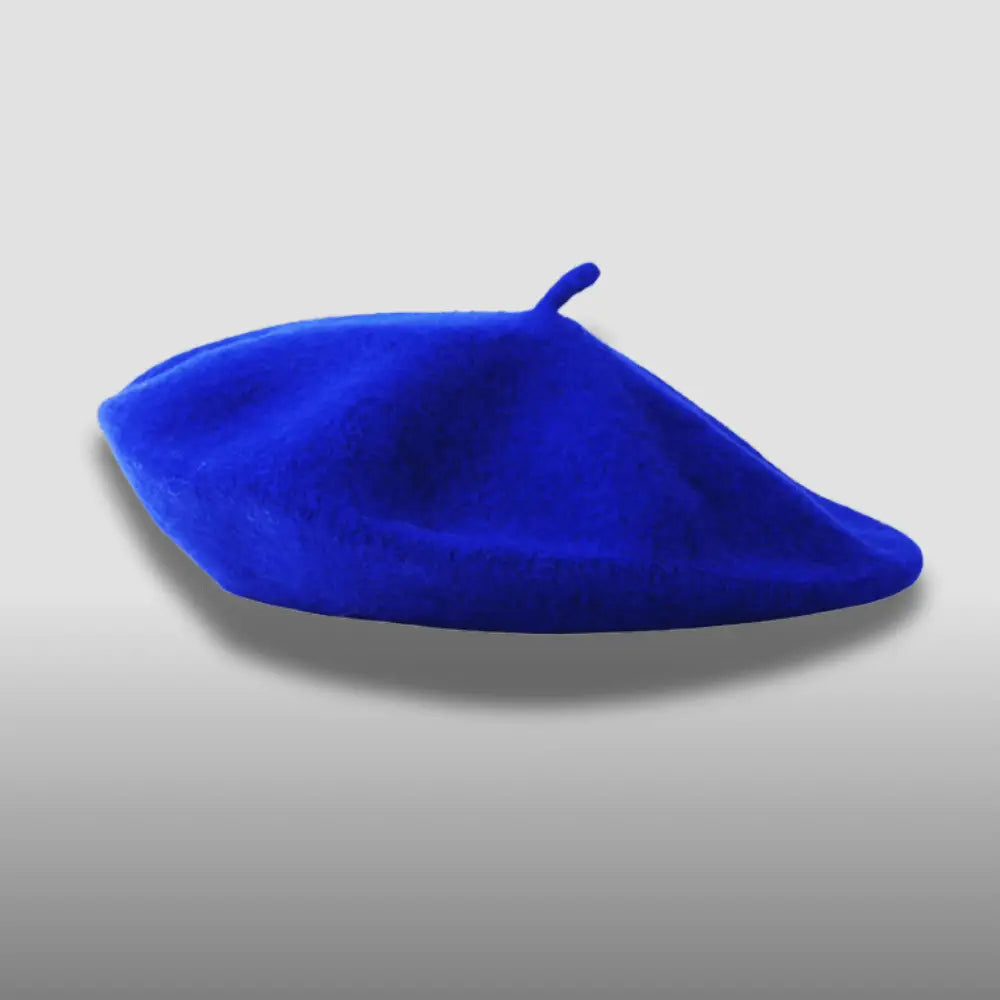
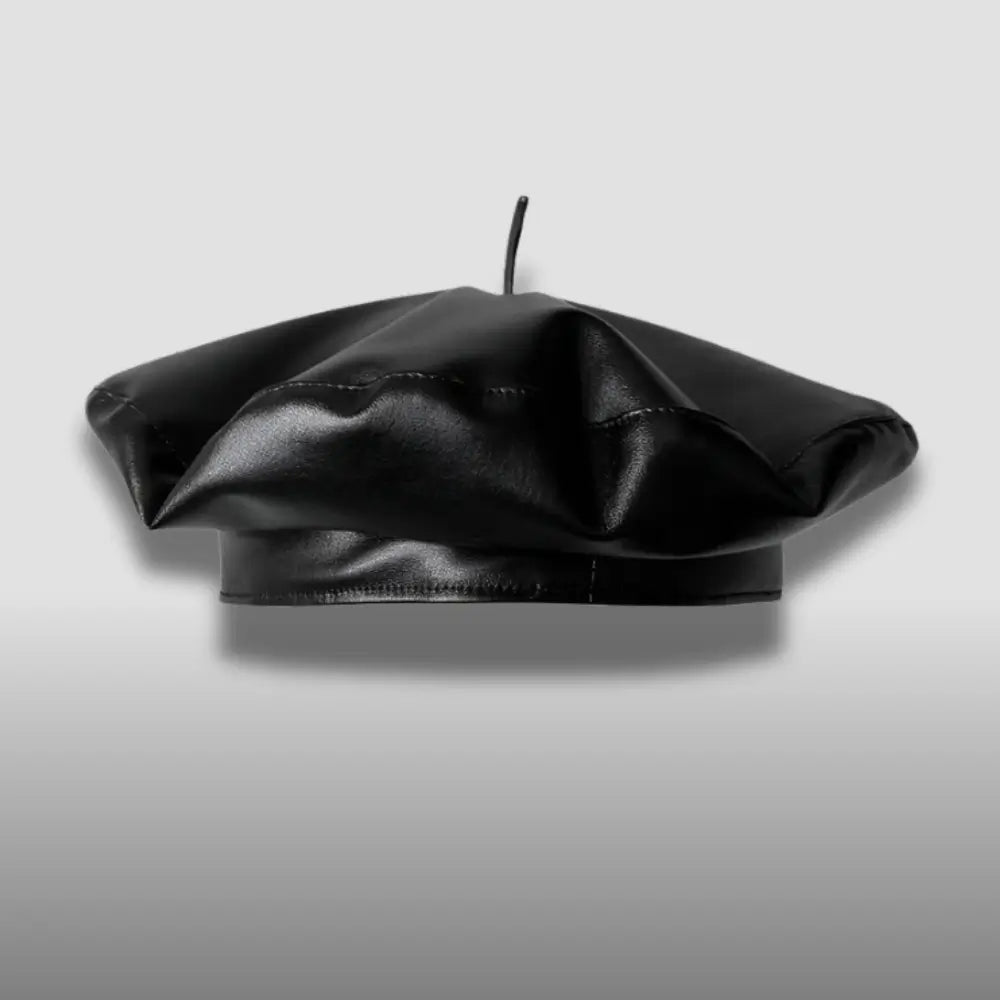
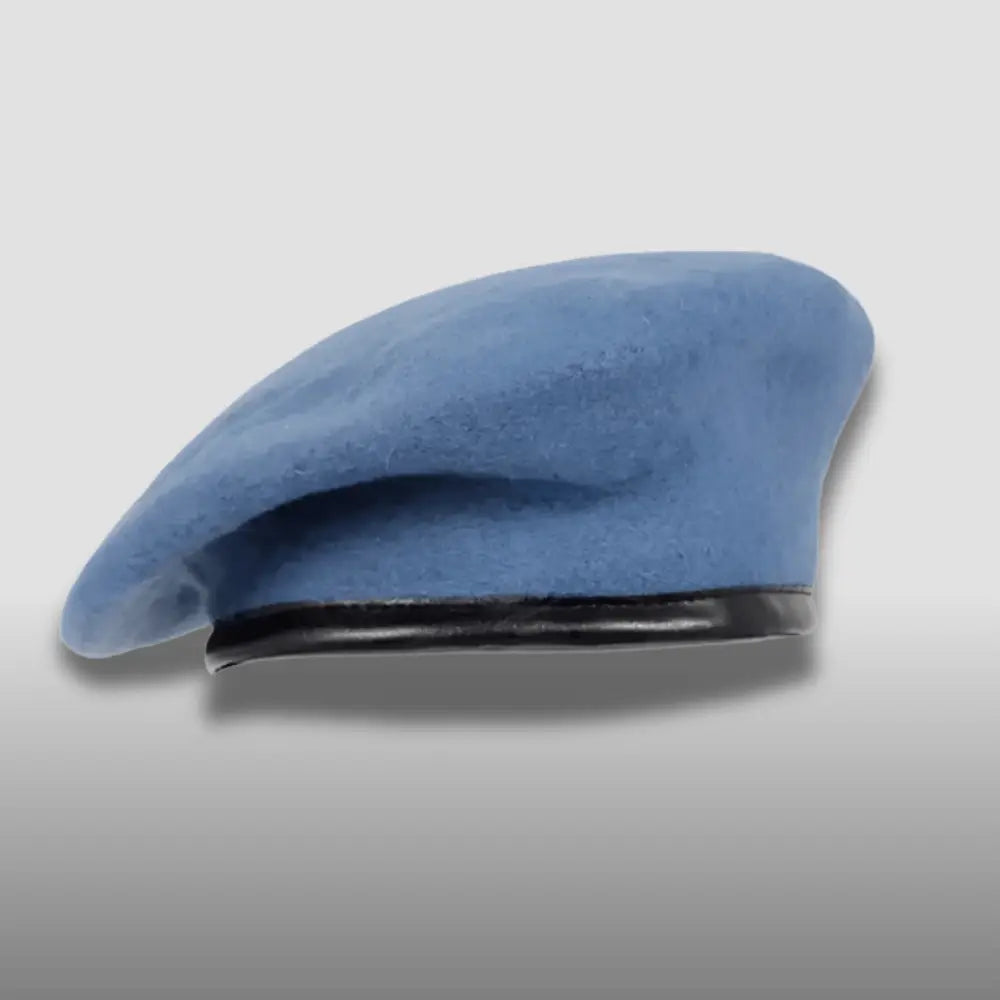
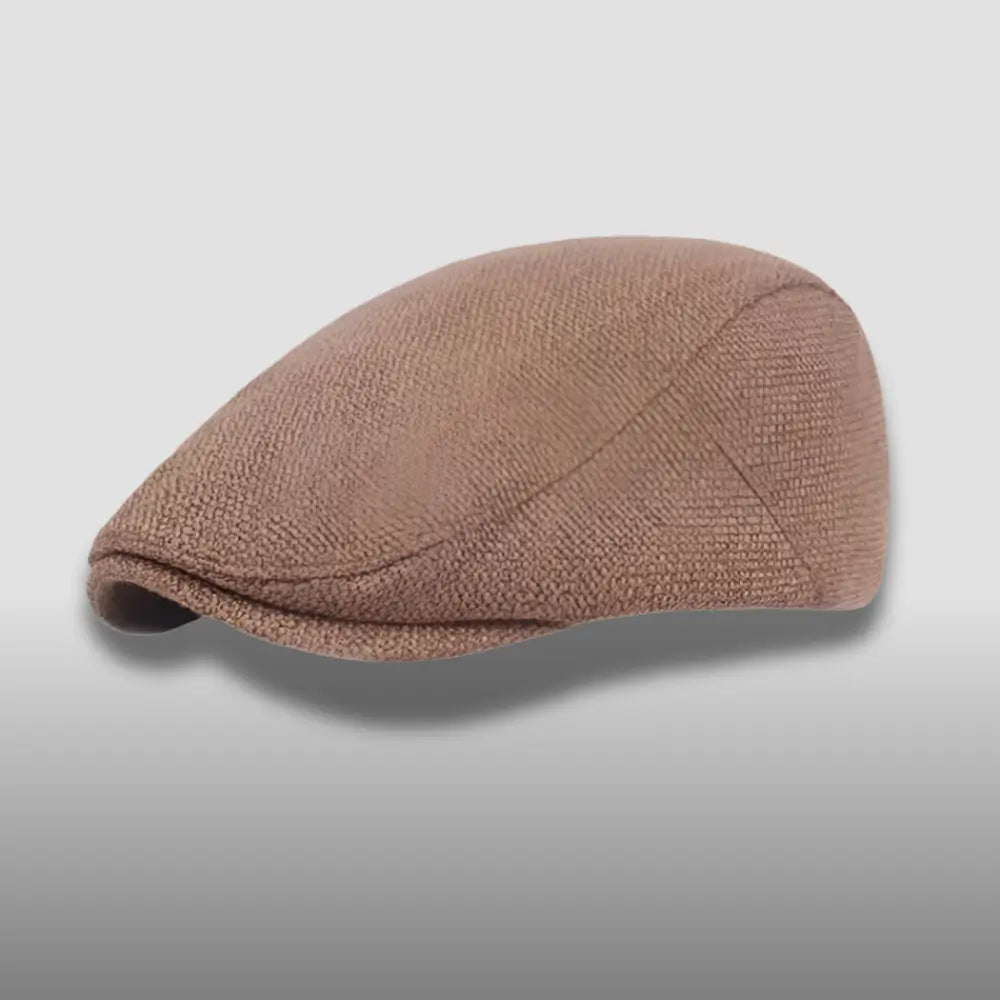
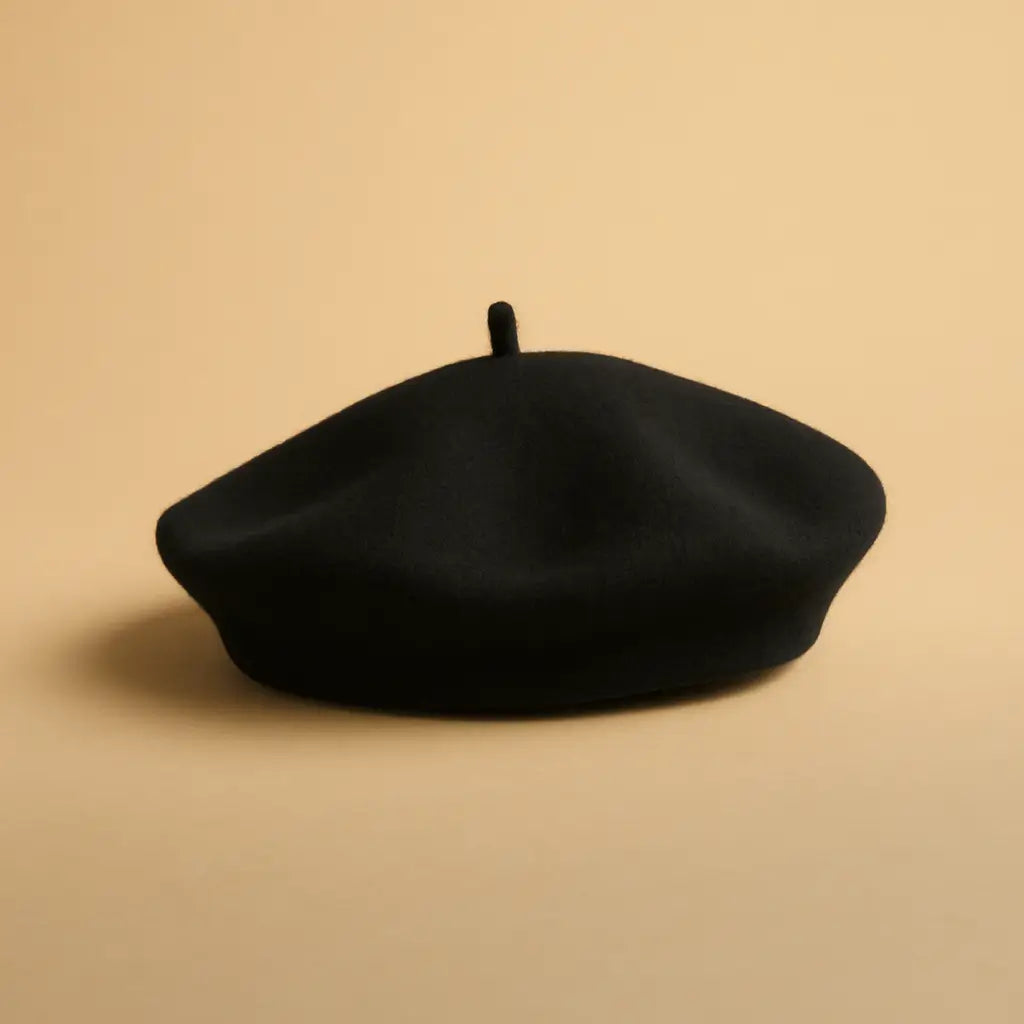
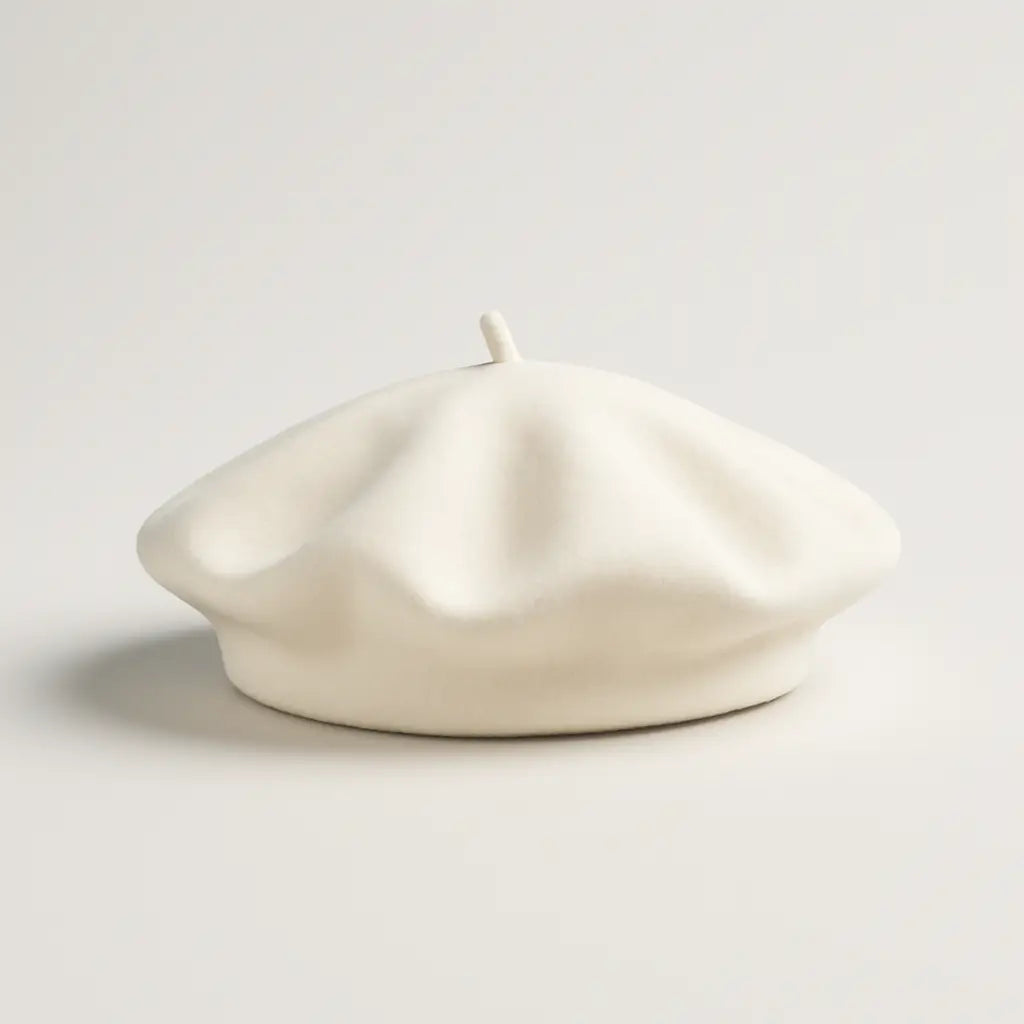
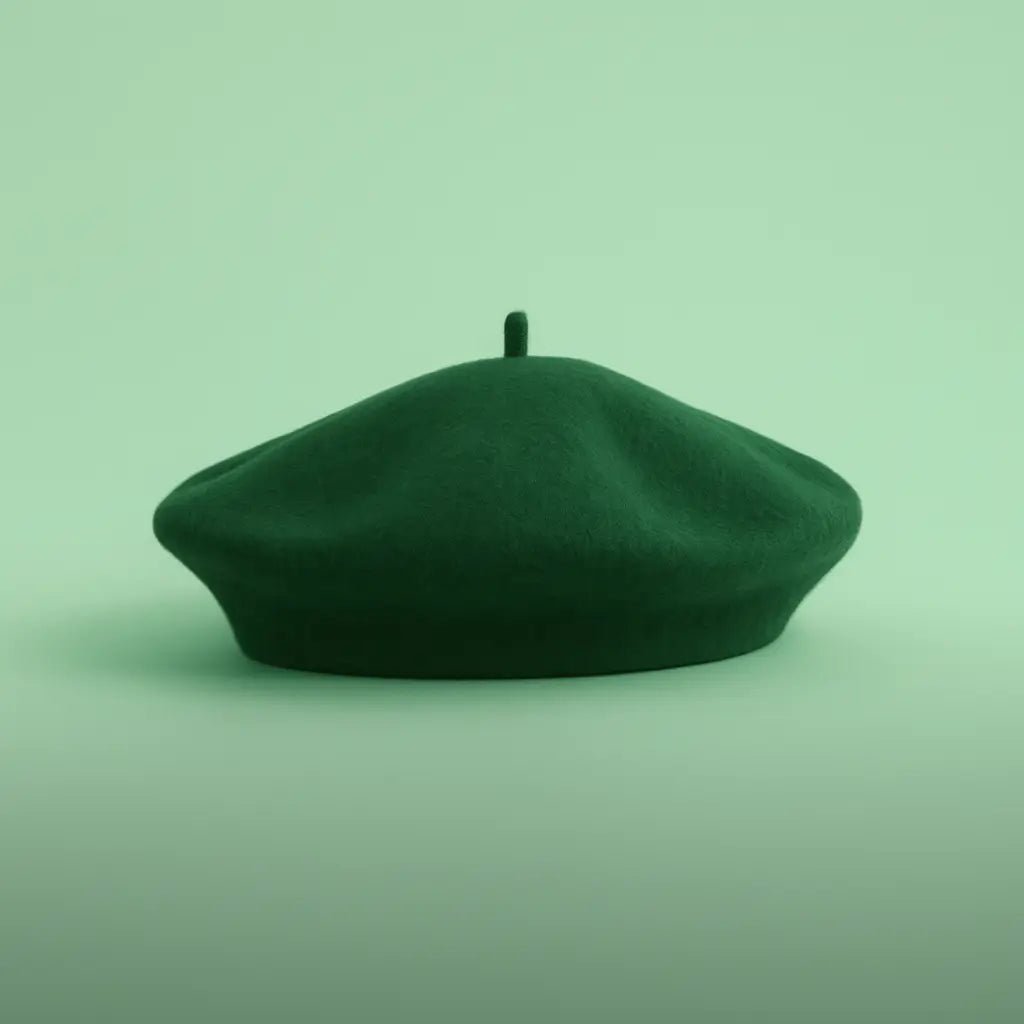
Short answer: the beret most people picture is French, though Scotland has its own much older tradition of round, flat wool bonnets that just happen to look similar. They are not the same hat with two names. They are two separate wool-cap traditions that arrived at a comparable shape for the same practical reason, and history has mostly blurred the line between them.
I am Camille, and I shape berets by hand in the Béarn, the French region this specific hat comes from. So let me untangle the two: what actually makes a beret French, what the Scottish tam o'shanter really is, and why the confusion between them has lasted this long.
- The French beret comes from the Pyrenees (Béarn and Basque Country), documented from the 1800s.
- The Scottish bonnet, often called a tam o'shanter, is a separate, older tradition documented from the 1500s.
- Both are flat wool caps built for practical, weatherproof headwear, which is why they look alike at a glance.
- The word "beret" itself is French, from the Béarnais "berret," not Scottish or Gaelic.
- When someone says "beret" today in fashion, they almost always mean the French silhouette, not the Scottish one.
French beret vs. Scottish bonnet, side by side
| French Beret | Scottish Tam o'Shanter | |
|---|---|---|
| Origin region | Béarn and Basque Country, southwest France | Scottish Highlands and Lowlands |
| Documented since | 1800s, worn earlier by shepherds | 1500s, as the traditional "Scots bonnet" |
| Shape | Flat crown, close headband, no pompom | Fuller crown, often gathered high, sometimes a pompom (toorie) |
| Known for | Paris fashion, French military, Basque wool craft | Highland dress, tartan patterns, Scottish regiments |
| Word origin | French, from the Béarnais "berret" | Scots, named after the poem character Tam o'Shanter |
The French beret: what it actually is
The beret as most people picture it today traces to the shepherd villages of the Pyrenees, split between the French Béarn and the Basque Country on both sides of the border. It was boiled wool, hand-shaped, worn for weatherproofing long before anyone thought of it as fashion. Through the 1800s, French manufacturing towns in the Béarn built a real industry around it, and in 1889 the French army adopted it for its mountain infantry, cementing the beret's place as an official French item.
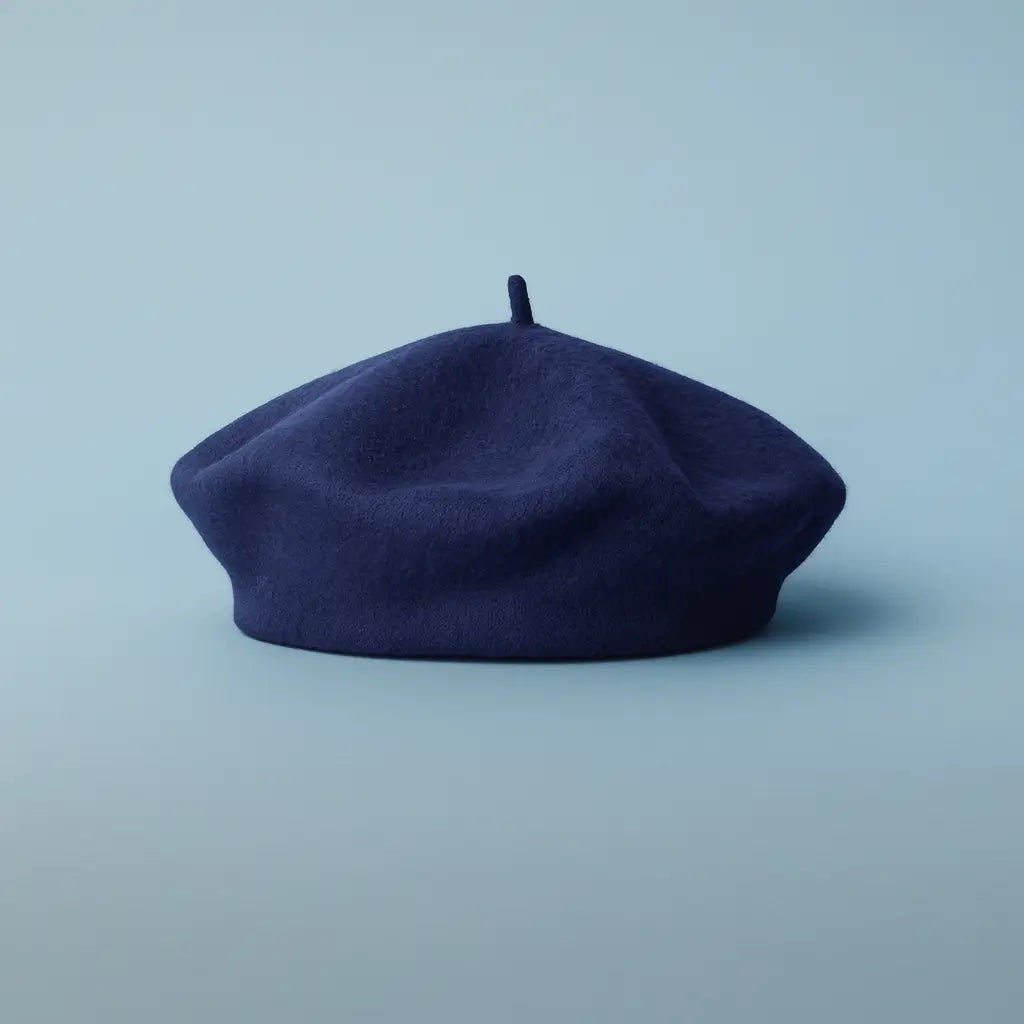
By the early 1900s, Paris had taken the beret from workwear to style statement, worn by painters, writers, and eventually just about everyone who wanted a bit of that easy French confidence. That is the version we still make, and the one in our own Navy Blue Beret keeps the same close-fitting, no-pompom shape the Béarn tradition is known for.

★★★★★ 4.9 · 75 reviews
Navy Blue Beret
Soft felted wool in the true French silhouette: flat crown, close headband, no pompom in sight.
Shop now · $45The Scottish tam o'shanter: a different hat, a similar idea
Scotland's flat wool bonnet is older than the French beret in the historical record, documented from the 1500s as everyday Highland and Lowland headwear. It later took the name "tam o'shanter" after the title character in Robert Burns's poem, and it developed its own distinct features: a fuller, more gathered crown, tartan trim in military and Highland dress versions, and often a pompom, called a toorie, on top.
Scottish regiments still wear versions of this bonnet as part of formal dress today, and it remains tied closely to Highland identity and bagpipe bands rather than to Paris style. The two hats share a family resemblance, both being round, flat, weatherproof wool caps, but they grew up in separate countries with separate names, separate documented histories, and separate cultural roles.
Why the two get mixed up
The confusion is mostly about silhouette, not history. Both hats solve the same problem with the same material: a flat, brimless wool cap is cheap to make, easy to fold into a pocket, and sheds rain well. Two unrelated wool-working traditions arrived at a similar answer independently, which happens more often in clothing history than people expect. Add in loose, everyday use of the word "beret" to describe almost any round soft cap, and the line blurs further.
What actually settles it is the word itself. "Beret" is French, from the Béarnais dialect word "berret," not a Scots or Gaelic term. If a hat is called a beret, its name alone points back to France, whatever its shape happens to resemble. For more on how the modern silhouette is worn day to day, see our guide to are berets French, which covers the fuller origin story.
If you want the true French silhouette rather than a Highland-style bonnet, look for a flat crown with no pompom and a close, low headband. A gathered, fuller top with a toorie on it is the Scottish shape, not the French one.

What "beret" means today
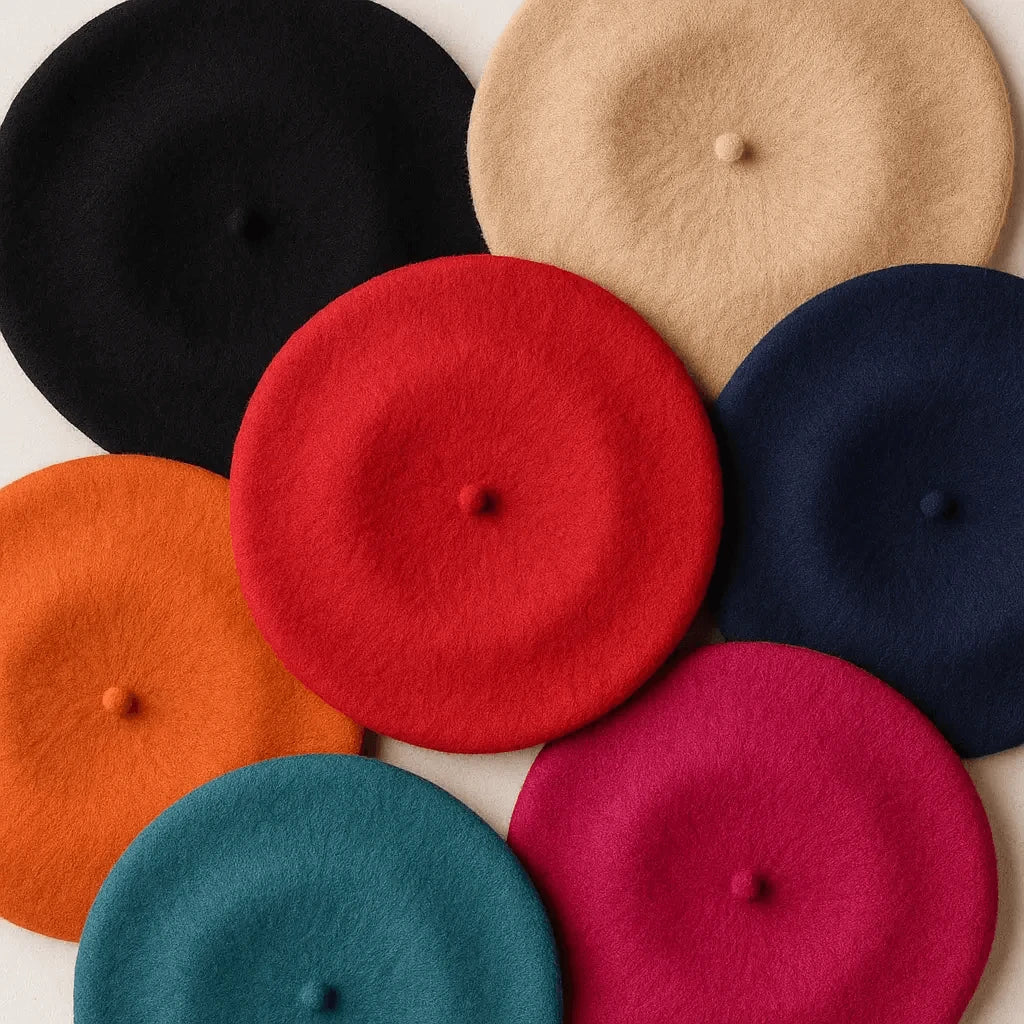
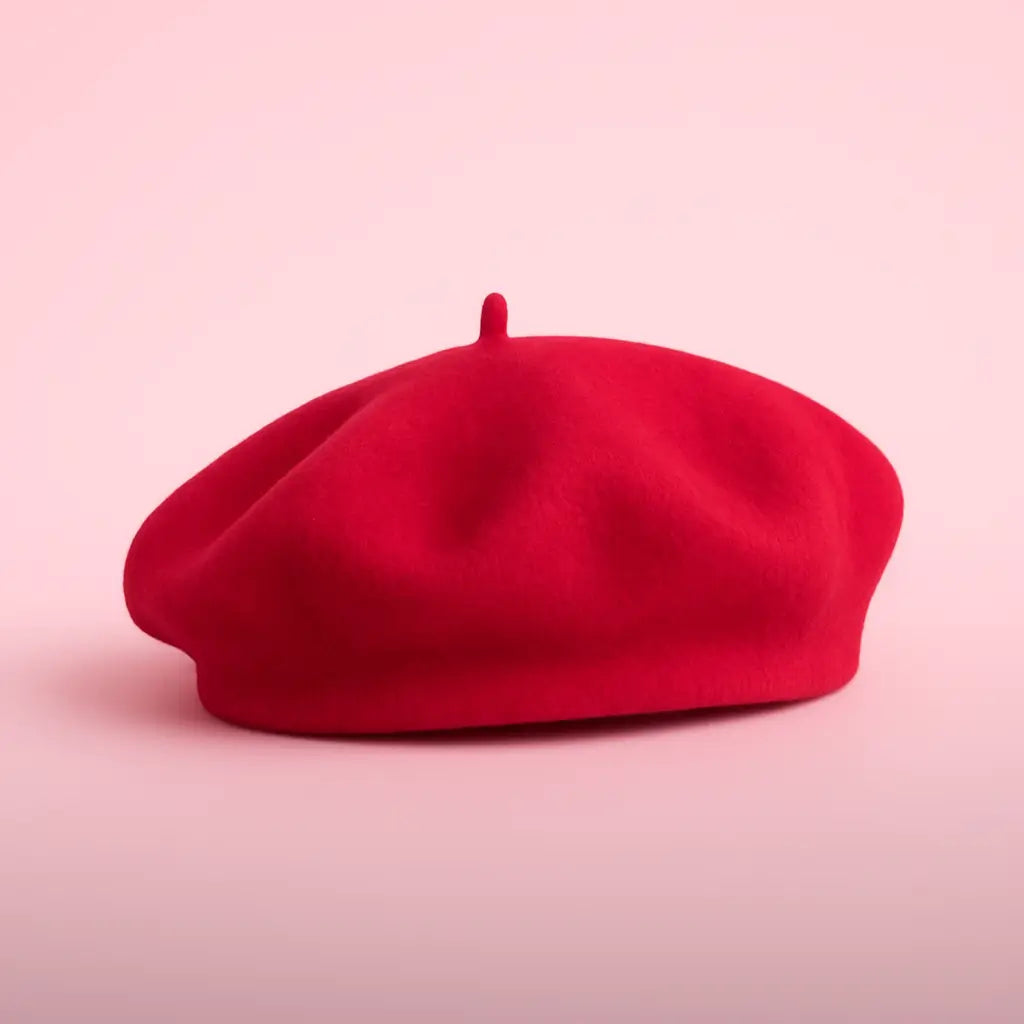
Ask for a beret in a shop anywhere outside Scotland, and you will be handed the French silhouette: flat, close, no pompom, usually in wool or felt. That is the version fashion, film, and street style have run with for over a century, and it is the version that shows up whenever someone says "beret" without qualifying it further. A bold color like French Red carries that silhouette clearly and makes the distinction easy to see at a glance.

★★★★★ 4.8 · 80 reviews
French Red Beret
Vibrant felt in the classic flat-crown silhouette. Unmistakably French, no pompom in sight.
Shop now · $45Telling them apart at a glance
- Flat crown, close fit, no pompom: French beret.
- Fuller, gathered crown, often with a toorie or tartan trim: Scottish tam o'shanter.
- Called a "beret" with no other detail: almost always the French shape.
Caring for a wool beret
- Brush gently to lift dust and keep the felt looking fresh.
- Keep it away from heat, which tightens and shrinks felted wool permanently.
- Store on a rounded surface so the crown holds its shape between wears.
Never machine wash or tumble dry a wool beret, French or Scottish. Heat and agitation felt the wool tighter and shrink it permanently out of shape, and neither style can be stretched back once that happens.
Frequently asked questions
The modern beret silhouette, flat crown and no pompom, is French, from the Béarn and Basque Country. Scotland has its own separate, older wool bonnet tradition, the tam o'shanter, which looks similar but developed independently.
A beret has a flatter crown, a close headband, and no pompom. A tam o'shanter is fuller and more gathered on top, often finished with a pompom (toorie) or tartan trim.
No. "Beret" comes from the French Béarnais word "berret." The Scottish equivalent is called a bonnet or tam o'shanter, a completely different name for a related but separate hat.
The Scottish bonnet is documented earlier, from the 1500s. The French beret in its modern form is documented from the 1800s, though its shepherd origins likely go back further without the same written record.
Yes. In fashion and everyday retail, "beret" almost always refers to the French flat-crown silhouette rather than the Scottish bonnet shape.
So, French or Scottish? They are two different hats that happen to look related. The beret you are picturing, and the one we make, is French through and through.


Worn well, never overthought.
Camille